
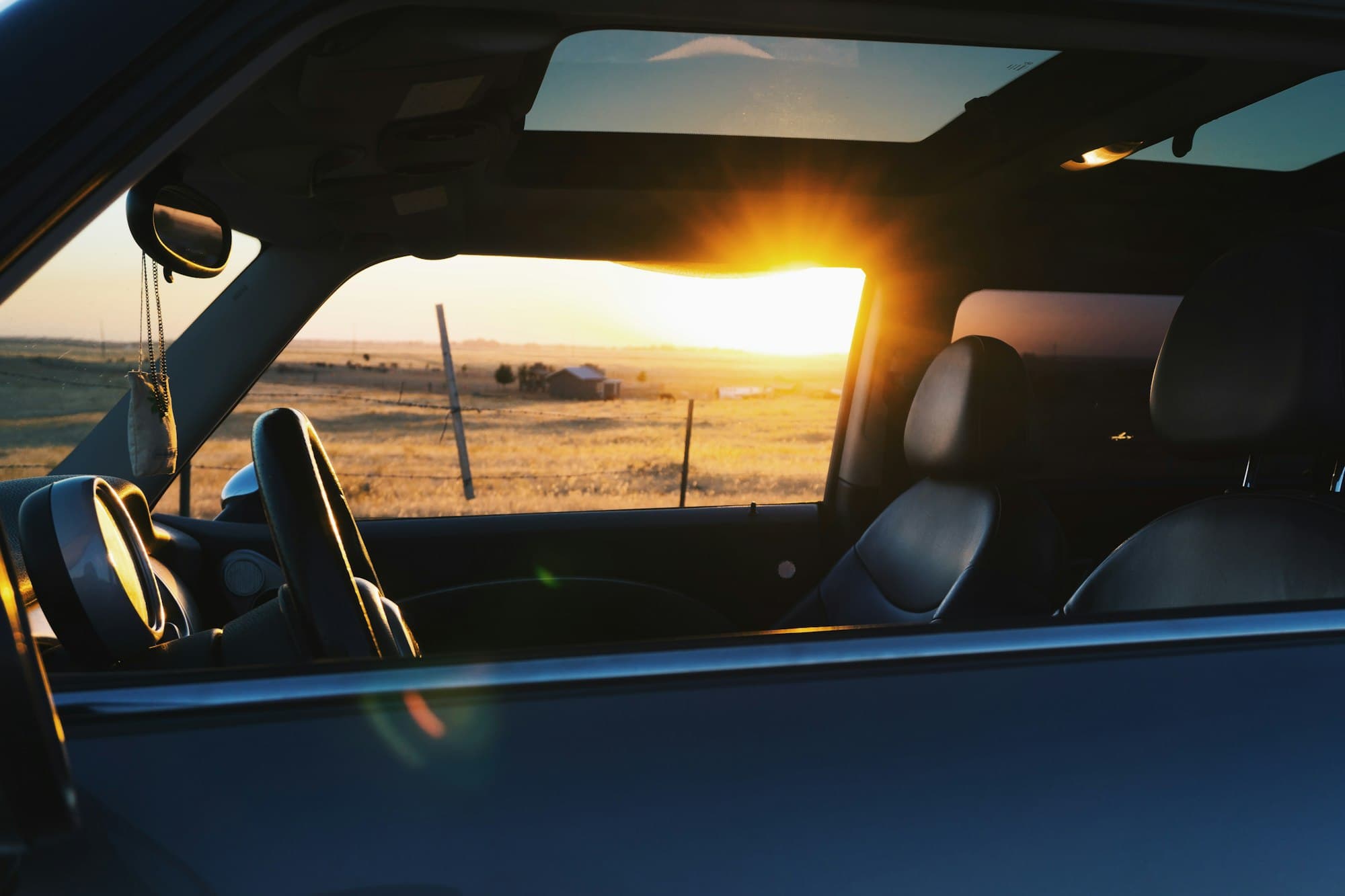
Good car window tinting Gold Coast summers demand does three jobs: it blocks UV, cuts glare and keeps the cabin cooler when the car sits in the sun. The film type decides how much heat is kept out, and the shade decides how dark the glass looks and whether it stays legal.
For most drivers, a quality film in a 35% or 50% shade on the front sides and 20% at the rear gives the best balance of comfort, privacy and visibility. Below we explain the main film types, how to choose a shade, and how our mobile service fits the film at your home or work.
Prices and shade options are on our window tinting page.
Why tint makes such a difference under coastal sun
A car parked in the open on a summer afternoon heats up fast, and much of that heat comes through the glass. Tint reduces the energy coming in, so the air conditioning has less work to do and the steering wheel and seats are easier to touch.
- UV protection: our films block 99% of UV, which helps protect your skin on long drives and slows fading and cracking on the dashboard, seats and trims.
- Glare: tint softens harsh light off the road, water and other cars, which makes driving into a low sun less tiring.
- Privacy: darker rear windows keep bags, tools and shopping out of view.
- Comfort for passengers: kids and pets in the back are shielded from direct sun.
Heat rejection versus darkness
It's easy to assume the darkest film keeps a car coolest, but that isn't how it works. Much of the heat from the sun is infrared energy you can't see, and how well a film blocks it depends on what it's made from. A quality film in a medium shade can keep a cabin more comfortable than a cheap film in a much darker shade.
Tint film types explained
Not all film is built the same way. The construction affects heat rejection, clarity, how long it keeps its colour and whether it interferes with signals.
Dyed film
Dyed film uses a layer of dye to darken the glass and absorb some heat. It's the most affordable type and looks good when new, but cheaper versions can fade towards purple over time and reject less heat than other films.
Metallised film
Metallised film contains tiny metal particles that reflect heat away. It's durable and effective, but the metal can interfere with phone reception, GPS and keyless entry signals, and it often has a shinier look.
Carbon film
Carbon film uses carbon particles to block infrared heat without metal. It has a matte finish, holds its colour well and doesn't affect signals, which makes it a popular middle ground.
Ceramic film
Ceramic film uses non-conductive ceramic particles to reject heat. It can keep out a lot of heat even in lighter shades, stays clear to look through and doesn't affect electronics. It usually sits at the premium end.
Whichever type you choose, quality matters more than the label. A well-made film, fitted carefully, will outlast and outperform a bargain roll every time.
When you book, ask us which film we'll fit and why. A good installer is happy to explain the choice.
Choosing the right shade
We offer 50% (light), 35% (medium), 20% (dark) and 5% (limo) shades. The number is the share of visible light the film lets through, so a lower number means darker glass.
- Want heat and UV control with a factory look: 50% all round, or 50% front and 35% rear.
- Want a balanced, sporty look: 35% front sides and 20% on the rear windows.
- Want maximum rear privacy on a family car: 20% on all rear glass, with a legal shade up front.
- Running a van or goods vehicle: darker film can be an option behind the driver.
Queensland sets minimum light levels for each window, and the factory tint in your glass counts towards the total. Our guide to Queensland's tint rules explains the limits and how to stay within them.
How mobile car window tinting Gold Coast visits work
Tinting doesn't need to mean a day without your car. We bring the film and tools to your home or workplace and do the job there. Here's how a typical visit runs.
- You choose your shades when you book, and tell us about access, height limits or parking.
- We arrive with everything needed and talk through the shade for each window.
- Each window is thoroughly cleaned inside, since any speck of dust under film shows up later.
- Film is cut and heat-shaped to match the curve of each pane.
- The film is applied to the inside of the glass with a slip solution, then squeegeed to push the water out.
- Edges are checked and trimmed, and we explain the aftercare before we leave.
Signs of a quality tint job
Once the film has cured, take a close look at each window in good light. A careful install shows in the small details.
- No specks of dust, hairs or grit trapped under the film
- Edges trimmed neatly and sitting close to the edge of the glass
- No lifting or peeling at the top edge where the window slides into the seal
- An even shade across each window with no streaks or creases
- A clear, undistorted view through the glass, day and night
When old tint needs replacing
Tint doesn't last forever if it's cheap film or poorly fitted. Signs it's time for new film include a purple or brown colour shift, bubbles that appear long after installation, peeling edges and scratches that blur the view.
Old film has to be removed and the adhesive cleaned off the glass before new tint can go on. If your car already has film, mention it when you book so we can plan for it.
Aftercare for new tint
New film needs a little time for the remaining moisture to dry out between the film and the glass. During that period it may look slightly hazy or show small water pockets. That's normal and clears as it cures.
- Keep the windows wound up for the first few days, or as long as we advise on the day.
- Don't pick at the edges or try to push out water pockets.
- Clean tinted glass with a soft microfibre cloth and an ammonia-free cleaner.
- Keep sharp objects, seatbelt buckles and rings away from the film.
- Wash the outside of the car as normal, since the film sits on the inside.
If something hasn't cleared once the film has had time to cure, get in touch rather than trying to fix it yourself. Pressing on soft film can crease it.
Cost, cover and pairing tint with a detail
Mobile tinting starts from $295, and every job comes with a lifetime guarantee against fading and bubbling. Many owners book a tint alongside an interior detail so the cabin starts fresh, or with a ceramic coating, which also adds water-repellent Clear Vision Smart Glass to the outside of your windows. Our ceramic coating guide explains that package.
We cover the coast from Coolangatta up to Ormeau, with no call-out fee. Get a free quote and we'll come to you.