
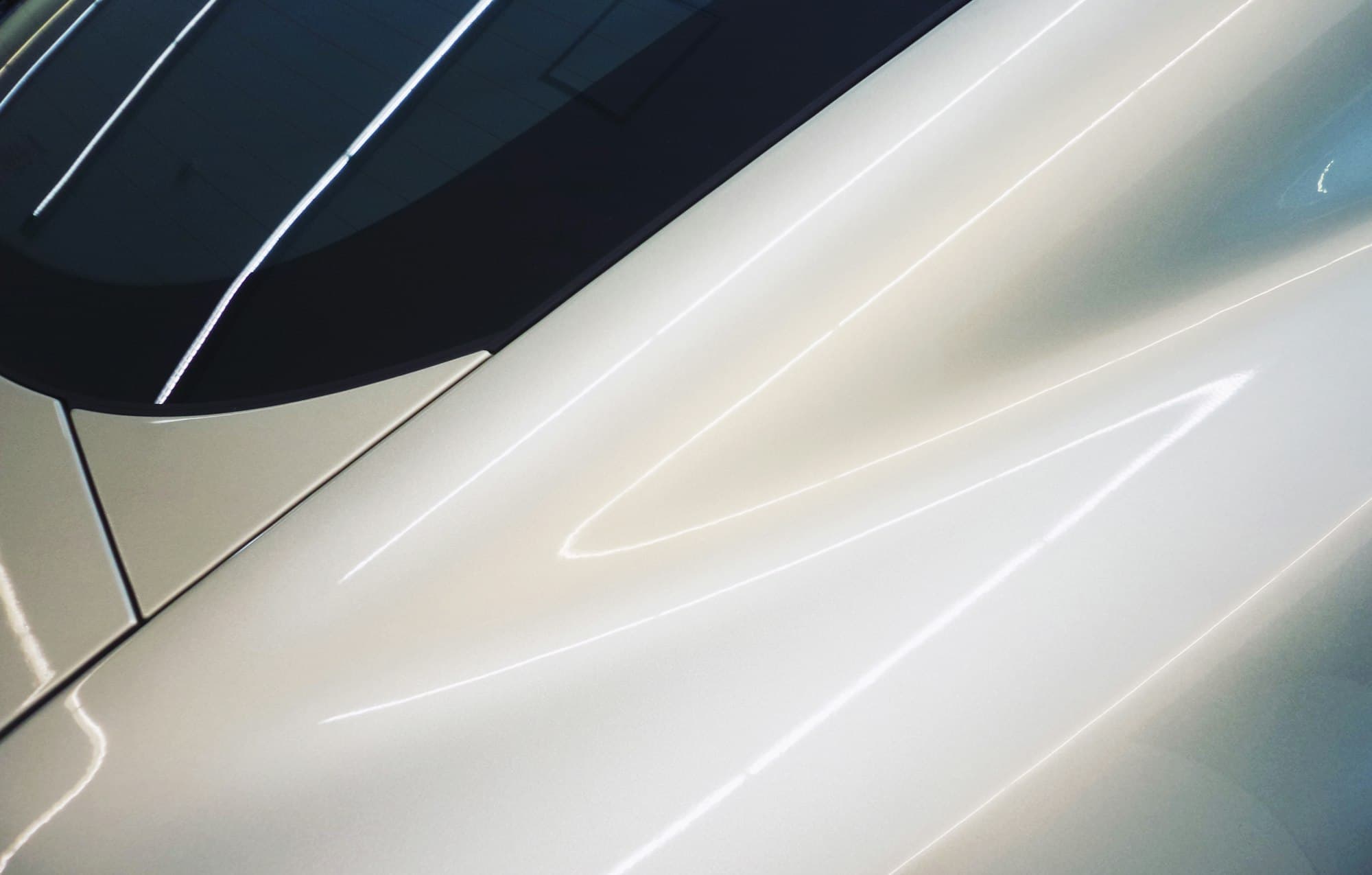
Most paint correction Gold Coast owners ask us about comes down to two problems: fine swirl marks from years of washing, and dull, faded paint caused by strong UV and salt air. Correction fixes both by machine polishing a tiny, controlled amount of clear coat until the surface is level and reflects light cleanly again.
Most cars need one or two polishing stages, and the paint should always be measured before anything starts. Some damage can't be polished away, such as peeling clear coat or scratches that reach the primer. This guide covers what each stage does, what's realistic for your car and why a hardware store buffer often leaves things worse than before.
If you already know your paint needs attention, our paint correction service page explains how we quote and book the work.
What paint correction actually does
Your car's colour sits under a clear coat, a transparent layer that gives the paint its depth and gloss. Swirls are thousands of shallow scratches in that clear layer. In shade they're hard to see, but in direct sun they show up as circular spider webs around any bright reflection.
Polishing works by removing clear coat around each scratch until its lowest point is level with the surface beside it. Once the surface is flat, light bounces back evenly and the gloss returns. It's a permanent fix for the marks it removes, unlike glazes and fillers that only hide them until the next few washes rinse them away.
How sun and salt air wear down paint on the coast
Oxidation and fading
UV slowly breaks down clear coat. Over time the surface turns flat and slightly cloudy, and colours lose their richness. Reds and dark colours tend to show it first, and roofs, bonnets and boot lids cop the worst of it because they face the sky all day.
Older cars with single-stage paint, where there's no separate clear layer, oxidise more visibly. The colour itself goes chalky and can rub off on a cloth. Careful polishing can often bring this paint back, as long as there's enough left to work with.
Salt, sand and wash marring
Living near the beach means a fine film of salt and grit settles on your car most days. Wiping that off with a dry cloth, a dirty sponge or a brush car wash drags the grit across the paint and leaves the swirls described above. Bird droppings, bat droppings and bug splatter add another layer of trouble, because heat helps them etch into the clear coat if they sit for long.
Single, two and three-stage correction compared
The number of stages describes how many polishing passes, with different pads and compounds, the paint receives. More stages remove more defects but also remove more clear coat, so the right choice is the lightest one that gets the result.
- Single-stage enhancement: one polishing step that clears light swirls and wash marring and lifts the gloss. It suits newer cars and paint that has been reasonably well looked after.
- Two-stage correction: a cutting stage to remove moderate swirls and scratches, followed by a refining polish to bring back clarity. This is the most common choice for daily drivers a few years old.
- Three-stage correction: two cutting stages for heavily marked paint, then a refining stage. It's reserved for cars with deep wash marring, heavy oxidation or neglected paint.
We decide on the stage after inspecting the car under strong lighting and measuring paint depth with a gauge. A small test section shows how the paint responds before the whole car is done, which is why correction is priced by quote rather than from a fixed list.
What paint correction can't fix
Polishing is powerful, but it only works within the clear coat. Some damage goes deeper than any polish can safely reach, and an honest detailer will tell you before starting.
- Scratches that catch your fingernail, which usually means they've gone through the clear coat
- Clear coat that is peeling, flaking or has turned white and patchy
- Stone chips and gouges that have removed paint altogether
- Rust bubbling under the paint
- Etching so deep that removing it would leave the clear coat too thin
- Panels that were resprayed with very little clear coat to begin with
These need touch-up paint or a panel shop. Correction can still make the rest of the car look far better, and we'll point out anything we can't improve so your expectations match the result.
Why DIY paint correction often goes wrong
Machine polishers are easy to buy, and online videos make the job look simple. The problems usually show up afterwards, in bright sunlight.
- Burning through edges: clear coat is thinnest on body lines and panel edges, and a polisher can cut through it in seconds
- Holograms: rotary machines used without a refining step leave hazy trails that look worse than the original swirls
- Polishing dirty paint: skipping decontamination grinds bonded grit into the surface
- Working on hot panels: in summer heat, compounds dry out quickly and become harder to work and remove
- No paint depth reading: without a gauge, there's no way to know how much clear coat is left
Clear coat doesn't grow back, so mistakes here are expensive. If you enjoy caring for your car, a careful hand wash routine will do more good than a polisher in untrained hands.
How a professional correction is carried out
Every job follows the same order, because each step protects the next one. Rushing the preparation is the most common reason a polishing job disappoints.
- A thorough hand wash to remove loose dirt and salt
- Iron decontamination and a clay treatment to lift bonded contaminants
- Inspection under bright lighting to map swirls, scratches and fading
- Paint depth readings across the panels
- A test section to choose the right pad and compound
- Cutting and refining passes, panel by panel
- A wipe-down to remove polishing oils so the true finish can be checked
- Protection to keep the corrected paint looking that way
Keeping corrected paint looking good
Freshly polished paint has no protection on it, so it needs a layer of wax, sealant or ceramic coating straight away. For cars that live outdoors near the ocean, a coating is the longest-lasting option. Our exterior ceramic coating packages include one to three stages of correction depending on whether the car is new or second-hand, and our guide to ceramic coating on the Gold Coast covers what it does in salt air.
Washing habits matter just as much. Rinse salt off after beach trips, use a pH-neutral shampoo with two buckets, dry with a soft microfibre towel and park in shade where you can. A regular maintenance clean keeps the finish from sliding back, and our article on how often to detail your car explains sensible intervals.
Paint correction Gold Coast: booking and quotes
We bring the gear to your home or workplace anywhere between Coolangatta and Ormeau, with no call-out fee. If you prefer, you can bring the car to our Molendinar workshop by appointment. Owners of high-end cars may also like our notes on luxury car detailing, which covers gentler methods for delicate finishes.
Send us a few photos of your paint in daylight and we'll give you a free quote, plus an honest view on which stage it needs. Get in touch here and we'll come to you.