
For most daily drivers, car detailing in Geelong works best on a simple rhythm: a proper wash every week or two, an exterior detail every three months or so, and a full interior and exterior detail twice a year. Cars parked near the water, driven on the Surf Coast often or used for kids, pets and work gear may need the interior done more often.
That schedule is a starting point, not a rule. The right timing depends on where you park, how far you drive and what the car carries. Below we look at what local conditions do to a car and how to build a plan you will actually stick to. You can see every package on our Geelong car detailing page.
What Geelong conditions do to your car
A car here deals with a mix of coastal air, harsh summer sun and damp, grimy winters. Each one wears the car in a different way.
Salt air near the bay and the Surf Coast
If you live or park near Corio Bay, on the Bellarine or along the Surf Coast, a fine salty film settles on the paint, glass and wheels. Left alone, salt holds moisture against metal surfaces and can speed up corrosion on exposed parts. Beach trips add sand to the carpets and the door seals as well.
You may not see it, but you can often feel it. Paint that has been sitting in coastal air tends to feel slightly gritty even after a quick rinse, and glass picks up a haze that smears when the wipers run. Regular washing keeps that film from building up.
Summer sun
Strong UV fades unprotected paint, dries out dashboards and leather, and bakes bird droppings and tree sap onto the clear coat. Etching from droppings can happen quickly on a hot day, so prompt removal matters more in summer.
Interiors suffer too. A car parked in an open lot all day can get very hot inside, which speeds up wear on the dash, the steering wheel and leather seat bolsters. Regular cleaning and conditioning slows that down, and a sunshade does a lot of quiet work.
Winter grime
Wet roads throw up a mix of oil, tyre residue and dirt that clings to the lower panels and wheels. Inside, damp shoes and wet umbrellas soak into the carpet, which can lead to musty smells if the car never dries out properly.
Shorter days also mean more washing gets put off. A month or two of road film left on the paint is harder to shift than a week's worth, so winter is when a mid-season exterior detail earns its keep.
Car detailing Geelong: a schedule by season
Here is a realistic plan for a car that is driven every day and parked outside at least some of the time:
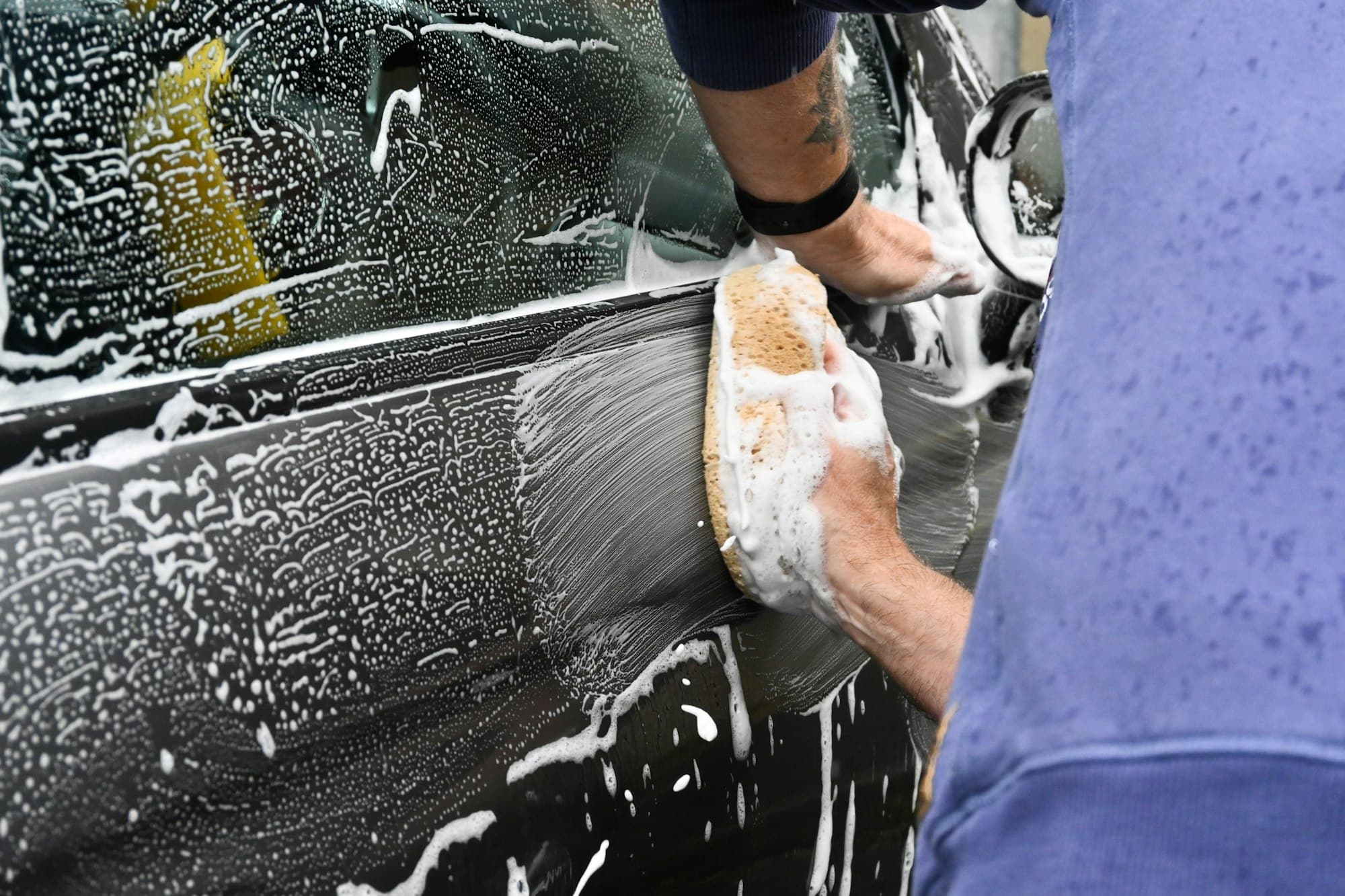
- Every one to two weeks: a careful hand wash, especially after beach trips or salty, windy days
- Every three months: an exterior detail to remove bonded grime and refresh the finish, such as a Mini Detail from $145 or Exterior Emerald from $245
- Every three to six months: an interior detail, sooner with children, pets or work gear, starting with Interior Emerald from $195
- Twice a year: a full interior and exterior detail, ideally before summer and at the end of winter
- When the paint looks dull or swirled: an assessment for paint correction
Garaged cars driven less often can stretch these intervals. Cars parked on the street near the beach should lean towards the shorter end.
Work vehicles and family cars are different again. A ute that carries tools, a wagon that does the school run, or a car that takes the dog to the beach every weekend will look tired inside long before the paint does. For those cars, putting the interior on a shorter cycle than the exterior usually makes the most sense.
Signs your car is due sooner
Calendars are helpful, but the car will often tell you when it needs attention. Book earlier if you notice:
- Water no longer beading on the paint, or the surface feeling rough after washing
- Orange specks on light-coloured paint, a sign of iron fallout
- A smell that returns soon after airing the car out
- Sand in the seat rails and carpet that a quick vacuum will not shift
- Brake dust that has baked onto the wheels
- Hazy glass that smears when the demister runs
Matching packages to the schedule
You do not need the biggest package every visit. A sensible approach is to alternate lighter and deeper work.
For the quarterly exterior visit, the Mini Detail (about one to two hours) or Exterior Emerald (two to two and a half hours) suits most cars. Twice a year, step up to a combined service. Our interior and exterior packages run from Sapphire at $245 (two to three hours) to Signature at $495 (five to six hours), with Emerald and Diamond in between. All prices are "from" and depend on the size and condition of the vehicle, and we confirm the final price before starting.
A regular schedule also tends to keep each visit simpler. A car that is detailed every few months rarely needs the heavier work that a car left for two or three years does, so the lighter tiers keep doing the job.
If you are unsure what a combined visit covers, our guide to interior and exterior car detailing breaks down each tier and how long it takes.
Keeping the car clean between visits
What you do between appointments decides how long the result lasts. A few habits make a real difference:
- Rinse salt and sand off after coastal drives rather than waiting for the weekend
- Use a pH-neutral car shampoo, two buckets and a clean mitt, and wash in the shade
- Remove bird droppings and sap as soon as you see them, using a quick detailer spray and a soft microfibre cloth
- Keep rubber floor mats in over winter and shake them out regularly
- Use a windscreen sunshade in summer to protect the dash
- Avoid automatic brush washes, which leave fine swirl marks on the paint
Inside, a quick vacuum every couple of weeks and a wipe of the steering wheel and door handles keeps the cabin close to how we left it. Keeping a microfibre cloth in the glovebox makes it easy to deal with spills before they set.
How ceramic coating changes the schedule
A ceramic coating does not stop a car getting dirty, but it makes the dirt far easier to remove. Grime and salt struggle to bond to a coated surface, water sheets off, and maintenance washes take less time and effort.
Our Gtechniq coatings offer five years of protection, and coated cars still need regular washes. What tends to change is how often you need decontamination and polishing. Many owners of coated cars find they can rely on careful washes plus periodic interior details. Our article on exterior car detailing explains where protection fits into the wider process.
Set up a plan that suits your car
Tell us how you use your car, where it is parked and what bothers you most about it, and we will suggest a schedule and a package to start with. We come to your home or workplace across Geelong, the Bellarine Peninsula and the Surf Coast, with no call-out fee. Request a free quote and we will take it from there.