
Done properly, exterior car detailing in Geelong follows four stages: a safe wash, decontamination to remove bonded grime, polishing where the paint needs it, and protection to keep it looking good. The result is paint that feels smooth, looks deeper and glossier, and stays cleaner for longer.
What a detail cannot do is erase every mark. Stone chips and scratches that have cut through the clear coat will still be there. Knowing the difference before you book helps you choose the right service. You can compare our packages on the Geelong exterior detailing page.
Stage one: a safe wash
Most swirl marks on cars are caused by washing, not driving. Dragging grit across the paint with a sponge or brush leaves fine scratches that show up in the sun. A careful wash is about removing dirt without grinding it in. On a car that has been driven along the coast, that loose grit often includes fine sand, which makes gentle technique even more important.
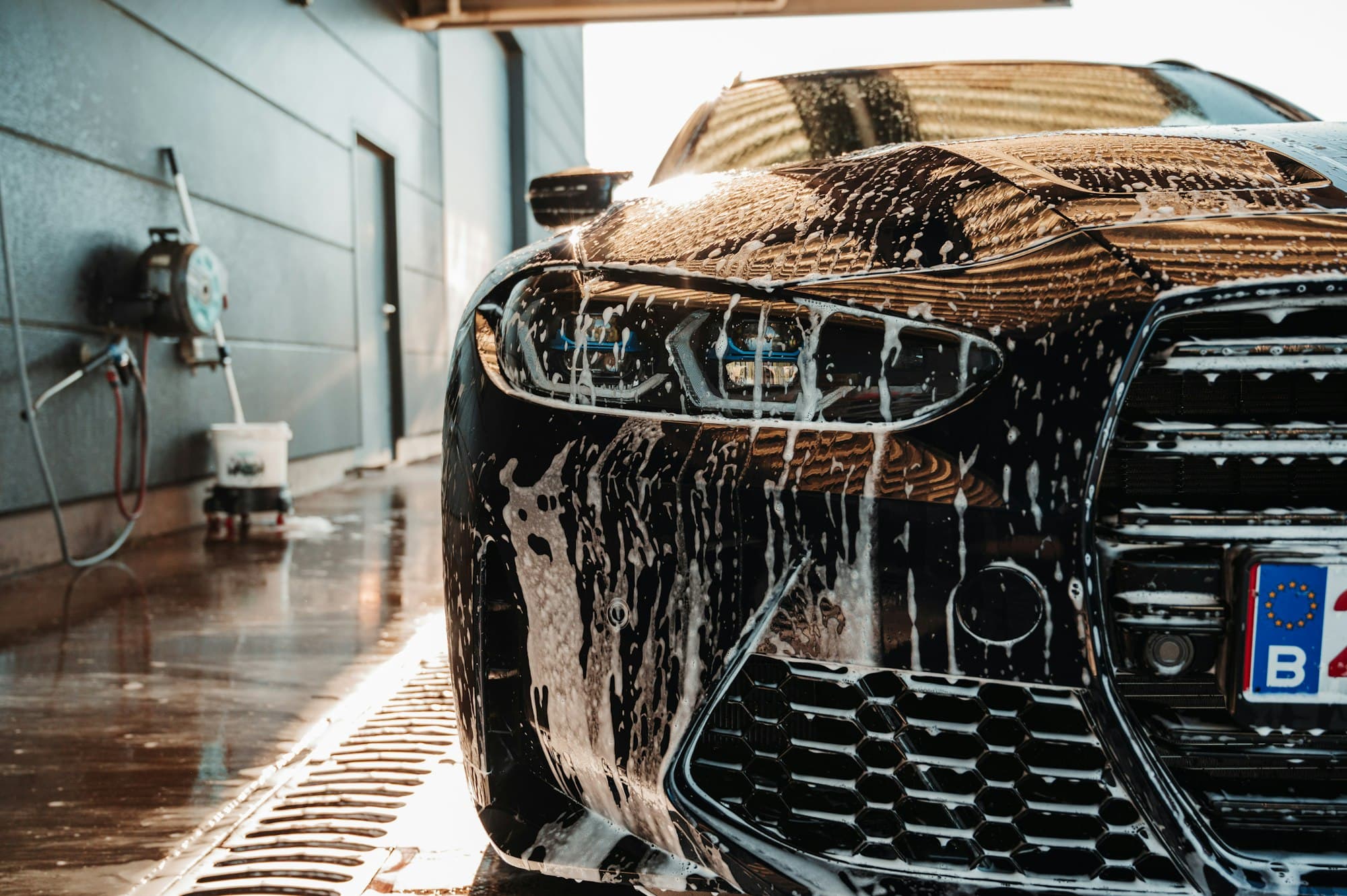
Our exterior work starts with a snow foam pre-wash. The thick foam clings to the panels and softens dirt so much of it rinses away before a mitt touches the paint. Wheels and tyres are cleaned with separate tools to keep brake dust off the body. The car is then hand washed and dried with soft towels.
Details that a quick wash skips get attention here too. Door jambs, the fuel filler area, badges, grilles and the lower sills all collect grime that drips back out onto clean paint if it is left behind. Cleaning them properly is part of what makes a detail look finished.
Stage two: decontamination
After a wash, paint can look clean but still feel rough. Run your fingertips lightly over a panel inside a thin plastic bag and you will often feel tiny bumps. That is bonded contamination, and it is common on cars that live near the coast or do lots of highway driving.
Iron fallout
Brake dust and industrial fallout contain tiny iron particles that embed in the paint and can show as orange specks on light colours. An iron remover dissolves them chemically, and on our higher exterior tiers this step is part of the job.
Tar, sap and salty film
Road tar on the lower panels, sap from trees and the film left by salt air all need their own treatment. A clay bar or clay mitt then lifts what remains, leaving the surface smooth and ready for polish or protection.
Skipping decontamination is a common shortcut. Polish or protection applied over bonded grime traps it in place and stops the product bonding properly, so the gloss looks patchy and fades sooner. A smooth surface is the base everything else depends on.
Stage three: polishing and paint correction
Polishing removes a microscopic layer of clear coat to level out swirls, haze and light marks. This is where the biggest visual change usually happens, but it needs to be done with care, since clear coat is thin and cannot be replaced.
When the paint needs more than a light refresh, the job becomes paint correction, priced by quote:
- Single-stage enhancement: light swirls and wash marring
- Two-stage correction: a cutting stage then a refining polish, for moderate swirls and scratches
- Three-stage correction: two cutting stages then refining, for heavily marked paint
We measure paint depth before any polishing, so we only remove what is safe for your car.
Not every car needs correction. Many cars that are washed carefully only need a wash and decontamination to look sharp again. A detailer who recommends heavy polishing on every car, without looking at the paint first, is removing clear coat you may not need to lose.
Stage four: protection
Clean, corrected paint needs protection or it will start to dull again. Waxes and sealants give a shorter-term layer that adds gloss and water beading. A ceramic coating forms a harder, longer-lasting layer that resists UV, salt and grime.
Our Gtechniq coatings offer five years of protection. Exterior packages include Gtechniq CSL on the paint, Clear Vision Smart Glass on windows and mirrors, and Wheel Armour on all four rims, with paint correction beforehand. Read more on our ceramic coating page.
A coating is not a force field. It will not stop stone chips or deep scratches, and it still needs regular, gentle washing. What it does is make the car much easier to keep clean and help the finish hold its gloss through the strong sun and salty air that cars here deal with.
Before and after: realistic results
A good detail makes a clear visible difference, but it is worth setting expectations. Here is a fair comparison.
What usually improves a lot:
- Dullness and haze from road film and old wax
- Light swirls and wash marks, once polished
- Iron specks, tar spots and sap
- Water spots that have not etched deeply
- Brake dust buildup on wheels
- Smeary, hazy glass
What may improve only partly, or not at all:
- Scratches that catch your fingernail, which are often through the clear coat
- Stone chips, which need touch-up paint rather than polish
- Deep bird dropping etching left for weeks in the sun
- Faded or peeling clear coat, which needs a panel repair
- Dents and panel damage
We will look at the paint with you before we start and tell you honestly which group your marks fall into.
Lighting also changes how a result looks. Swirls show most clearly in direct sun or under bright point lights, while overcast light hides them. When judging a before and after, look at the car in the same light both times so you are comparing fairly.
Exterior car detailing Geelong: packages and times
Our exterior-only packages are all done at your home or workplace:
- Mini Detail: from $145, about one to two hours, a thorough maintenance clean
- Exterior Emerald: from $245, two to two and a half hours, more time for decontamination and detail work
- Exterior Diamond: from $345, two and a half to three hours, the most thorough exterior package
Prices depend on the vehicle's size and condition and are confirmed before we begin.
The Mini Detail suits a car that is already in good shape and just needs a proper clean. Exterior Emerald is the usual choice for a daily driver that has gone a few months between details. Exterior Diamond makes sense when the paint feels rough, the wheels are caked in brake dust, or you want the most thorough result short of paint correction.
If the inside needs attention too, see our guide to interior and exterior car detailing.
Making the result last
The care after the detail decides how long it stays sharp. Wash every week or two with a pH-neutral shampoo and clean mitts, rinse off salt after coastal drives, and remove bird droppings quickly in summer. Skip automatic brush washes, which undo careful polishing. Our article on how often to detail a car in Geelong sets out a sensible schedule.
Get a quote for an exterior detail
Send us a few photos of the paint in daylight and tell us what bothers you about it. We will recommend the right package or correction level and give you a free quote, then come to you anywhere across Geelong, the Bellarine Peninsula and the Surf Coast. Request your quote here.