
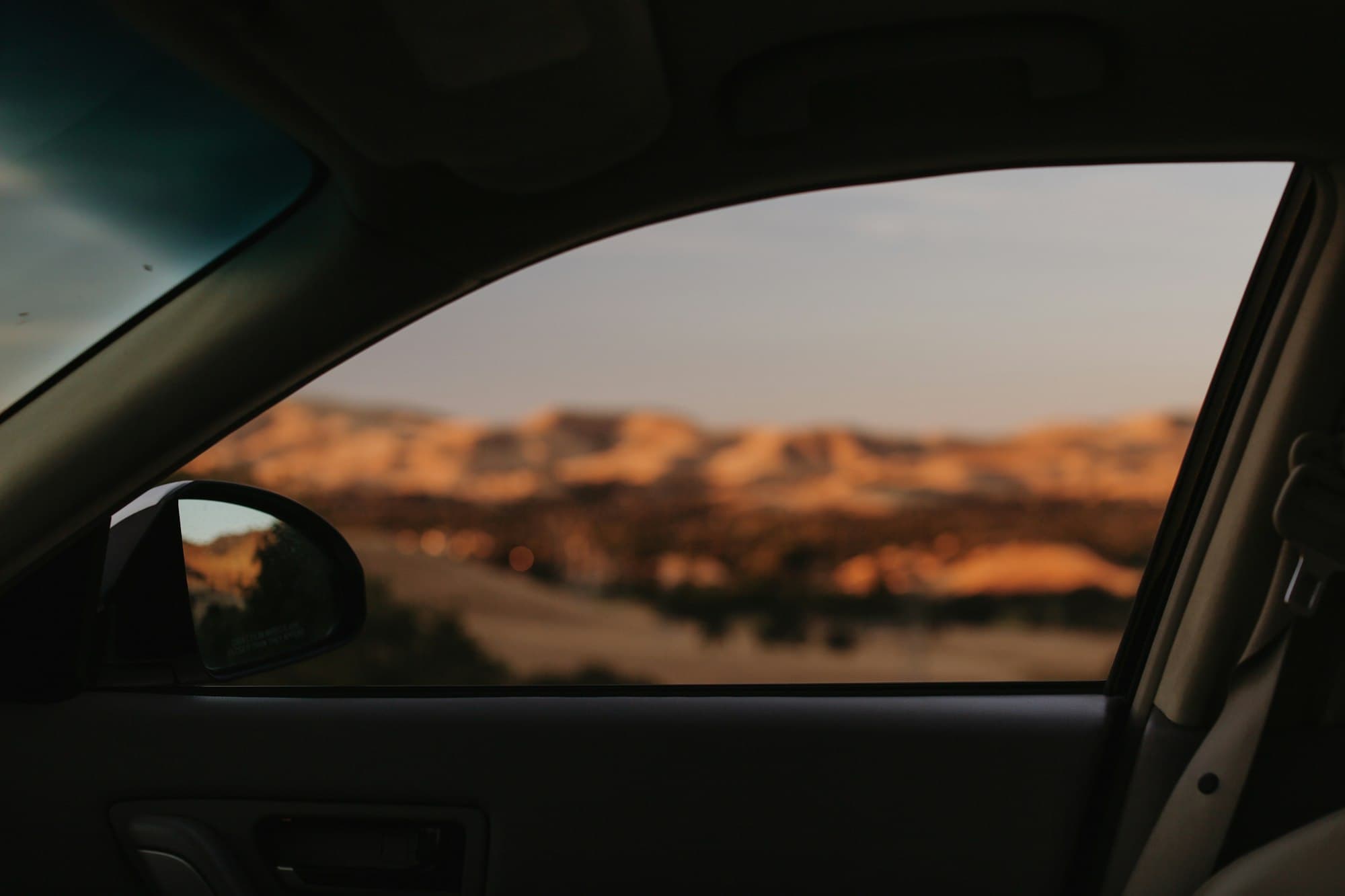
The right window tint Geelong drivers choose balances heat and glare control with what's legal and what you can comfortably see through at night. For most cars that means a quality film at 35% on the front sides and 20% to 35% on the rear. That combination cuts glare, blocks 99% of UV and makes the cabin far more bearable after the car has sat in the sun.
Below we cover how to pick a shade and film type, what mobile installation involves and how to look after new tint while it cures. For shades and pricing, see our car window tinting service, from $295 and fitted at your home or work.
What tint does for you through a hot summer
Tint is often sold on looks, but the practical benefits are what most owners end up appreciating. Here's what a good film does day to day.
- Reduces the heat that builds up inside a parked car, so the steering wheel and seats are kinder to touch
- Blocks 99% of UV, protecting skin on long drives and slowing fading on dashboards and upholstery
- Cuts glare from low morning and evening sun, especially on coastal roads with sun bouncing off the water
- Adds privacy, keeping bags and belongings less visible to anyone walking past
- Helps the air conditioning cope, as the cabin starts from a lower temperature
- Can help hold glass fragments together if a window is broken
Geelong summers can swing from mild to scorching in a day, and a car left in an open car park at the beach or a sports ground soaks up heat for hours. Tint won't make a parked car cool, but it takes the edge off that first blast when you open the door, and the air conditioning catches up sooner.
Families tend to notice the back seat difference first. Children and pets in the rear sit right in the path of afternoon sun, and a darker rear film makes those trips noticeably more comfortable.
Film types compared
Shade is only half the decision. The film's construction affects heat rejection, clarity, colour stability and even phone reception. These are the main types you'll come across.
- Dyed film: the most affordable, mainly absorbs heat rather than rejecting it, and cheaper versions can fade or turn purple over time
- Metallised film: reflects heat well and is durable, but can have a shiny look and may interfere with phone, GPS and radio signals
- Carbon film: matte finish, good heat rejection, no signal interference and strong resistance to fading
- Ceramic film: the highest heat rejection without needing to be very dark, excellent clarity and no signal issues, at a higher price
Does darker mean cooler?
Not always. A dark dyed film can feel less effective than a lighter ceramic one, because heat rejection depends on how the film handles infrared light as well as visible light. If heat is your main concern, ask about the film's heat rejection rather than judging by darkness alone.
Whichever installer you choose, ask what type of film they use and what the warranty covers. Preema's tint is backed by a lifetime guarantee against fading and bubbling, so you won't be dealing with purple, blistered windows a few summers from now.
Choosing a shade that suits your driving
Preema offers four shades: 50% (light), 35% (medium), 20% (dark) and 5% (limo). The lower the number, the darker the film.
In Victoria the front side windows must let through at least 35% of light and the rear side and rear windows at least 20%, measured through the glass and film together. Behind the driver, vans and vehicles that carry goods are allowed a darker film. Our article on window tint laws in Victoria explains how factory glass affects the reading.
A few practical pointers
- Drive a lot at night or on unlit roads? A lighter front shade keeps mirrors and side vision clear
- Carry kids or pets in the back? Go darker on the rear for shade and privacy
- Want a factory look? Match the rear film to any privacy glass already fitted
- Mainly worried about UV? Even the lightest shade blocks 99% of it
Mobile window tint Geelong: how installation works
Window tint is fitted to the inside of the glass. The installer first cleans each window thoroughly, because any speck of dust trapped under the film shows up as a bump. The film is then cut to the shape of the glass, heat-shrunk to follow curves on the rear windscreen and squeegeed into place to push out the application solution.
Because Preema is mobile, all of this happens at your home or workplace across Geelong, the Bellarine Peninsula and the Surf Coast. A garage or carport helps on a windy day, since airborne dust is the main enemy of a clean install. Most cars are finished in the same visit, and you'll be given simple care instructions before we leave. Mention any access, height limits or parking details when you book. If you'd rather drop the car off, our Bell Park workshop is available by appointment.
Caring for new tint while it cures
Fresh film needs time for the remaining moisture between the film and glass to evaporate. During that period it's normal to see a slightly hazy or patchy look, or small water pockets. These usually clear on their own as the film cures, faster in warm weather and slower in cool, damp conditions.
- Keep the windows up for the first few days, or as long as your installer advises
- Don't press, poke or try to push out water pockets
- Leave the edges alone, even if one looks slightly raised
- Hold off cleaning the inside of the tinted glass until the film has cured
- Park in the sun when you can, as warmth speeds up drying
Cleaning tinted windows for the long term
Once cured, tint is easy to live with, but it is softer than glass and can be scratched. A few habits keep it looking new.
- Use an ammonia-free glass cleaner, as ammonia can damage some films over time
- Wipe with a soft, clean microfibre cloth, never paper towel or an abrasive pad
- Never use a razor blade or scraper on the inside of tinted glass
- Watch seatbelt buckles, rings and cargo that can scratch the film when loading
- Avoid suction cup mounts and stickers on tinted windows
The outside of the glass can be treated like any other window. If you'd like rain to bead off as well, the Clear Vision Smart Glass coating in our exterior coating packages treats the outer surface of windows and mirrors. Our article on ceramic coating for everyday cars explains what else those packages include.
When old tint needs replacing
Old or low-grade film eventually shows its age. Common signs include a purple tinge, bubbles, peeling edges and a hazy look that makes night driving harder. Once film reaches that point, it needs to come off before new film can be fitted, so mention it when you request a quote.
Many owners book tint alongside a regular detail, so the car comes back clean inside and out. Our guide to mobile car detailing in Geelong explains how a visit works. When you're ready, ask Preema for a free quote and we'll come to you with no call-out fee.