
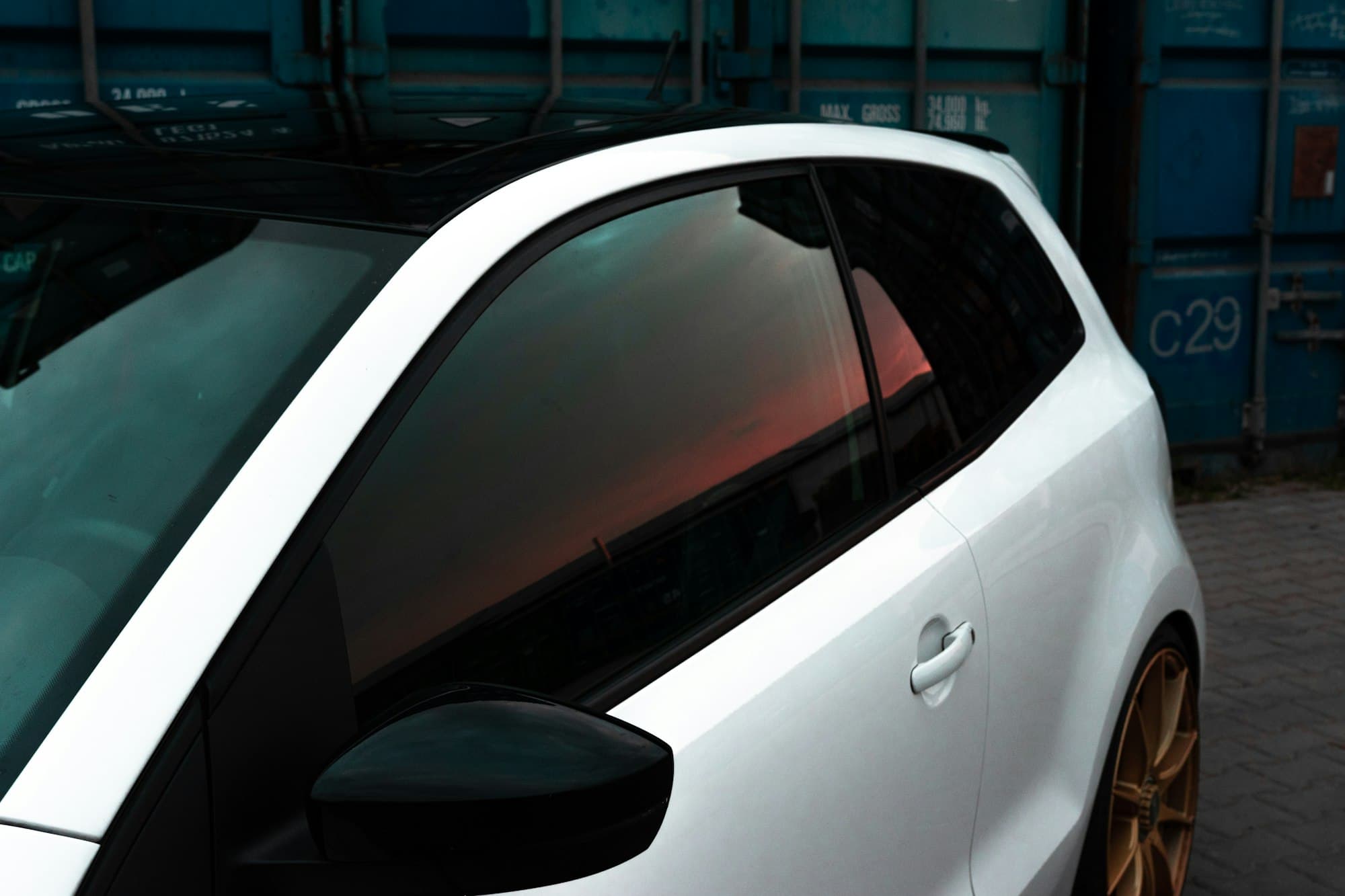
Car window tinting in Melbourne cuts heat, glare and UV, adds privacy and makes the cabin far more comfortable in summer. In Victoria you can go as dark as 35% on the front side windows and 20% on the rear side and rear windows, and a professional job with Preema starts from $295, fitted at your home or work.
What you get for the money comes down to the film, the shade and the person installing it. This car window tinting Melbourne guide explains the law, the shades, the main film types, the costs and what to look for in an installer. You can also see our window tinting service for packages and shades.
Victorian window tint laws
In Victoria, front side windows must let through at least 35% of light, and rear side and rear windows at least 20%. On the windscreen, tint is only allowed as a strip across the top.
Those percentages describe visible light transmission, meaning how much light passes through the window. The lower the number, the darker the tint. The limit applies to the window as it sits in the car, so factory glass that already has a slight tint will darken the result. A careful installer takes that into account so a front window doesn't end up below 35%.
Tint that is darker than allowed can lead to fines and defect notices, and can cause problems when the car is sold or inspected. It isn't worth the risk for a few percent of extra darkness.
Tint shades explained
We fit four shades. Here's how each one looks and where it fits within the Victorian rules:
- 50% (light): cuts glare and heat while barely changing how the car looks, and keeps night visibility close to untinted glass
- 35% (medium): the darkest shade suitable for front side windows in Victoria, and a popular all-round choice
- 20% (dark): strong privacy and the darkest option allowed on rear side and rear windows
- 5% (limo): very dark and below the Victorian limits for every window, so it isn't a road-legal option on a car registered here
The most common setup is 35% on the front side windows with 20% behind. It keeps the driver's view clear while giving rear passengers and anything on the back seat real privacy. If you do a lot of night driving or rely on your mirrors in tight spaces, a lighter shade is worth thinking about.
Types of window tint film
Shade tells you how dark the tint is. The film type decides how well it handles heat and how it ages. These are the three main kinds you'll hear about.
Dyed film
The most affordable option. Dye in the film absorbs light, so it looks dark and reduces glare, but it rejects less heat than other types. Cheaper dyed films can fade and turn purple over the years.
Carbon film
Carbon particles give a matte, neutral look and better heat rejection than dyed film. Carbon holds its colour well and doesn't interfere with phone, radio or GPS signals.
Ceramic film
Ceramic particles block a large share of heat without needing to be very dark, so even a lighter shade can make a noticeable difference. Visibility is clear and signals pass through without trouble. It usually costs more than dyed or carbon film.
Whoever you choose, ask which film brand and type is being quoted. Two quotes for the same shade can be for very different products.
Which film suits your car
If heat is your main concern, for example a dark car parked outside all day or kids in the back on hot afternoons, a higher-grade film is usually worth the extra. If you mainly want privacy and a cleaner look, a shade that suits the car matters more than squeezing out every degree of heat rejection.
Heat, glare and UV benefits
The films we install block 99% of UV. That matters on long drives, since UV passes through side glass even on cloudy days. It also slows the fading and cracking of dashboards, leather and trim, which our post on interior car detailing covers from the cleaning side.
Heat is the benefit most people feel first. A tinted car parked in the sun builds up less heat, cools down faster once you start driving and asks less of the air conditioning.
Tint also takes the edge off low winter sun on the freeway and glare from headlights behind you. Darker rear windows keep bags and valuables less visible, and the film can help hold glass together if a window is broken.
Car window tinting Melbourne prices explained
Tinting with Preema starts from $295. The final price depends on a few things:
- How many windows are being tinted
- The size and shape of the vehicle, such as a small hatch compared with a large SUV or wagon
- The shade and film chosen
- Whether old tint and adhesive need removing first
- Strongly curved rear windows, which take more time to shape
Very cheap tint is often cheap for a reason. Low-grade film and rushed fitting lead to bubbling, peeling edges and that faded purple look. Our tint comes with a lifetime guarantee against fading and bubbling.
How mobile window tinting works
With mobile tinting, the installer comes to you. Preema brings fully equipped vans to your home or workplace across Melbourne, with no call-out fee, so you don't lose half a day waiting at a shop.
The glass is cleaned thoroughly, then film is cut and shaped to each window, positioned with a slip solution and squeegeed firmly into place before the edges are finished. A garage, carport or sheltered spot helps keep dust and wind away from the film while it goes on.
Afterwards the windows need to stay up for a few days while the film cures. Our window tint aftercare guide explains what to expect and how to clean the glass. If you like the convenience, mobile car detailing works the same way.
To get ready, clear out the rear parcel shelf, door pockets and anything stored against the windows, and make sure the installer can open every door fully. Child seats close to the glass may need to come out so the film can be fitted cleanly.
Common tint problems and what causes them
Most of the faults people notice on older tint trace back to the film quality or how it was fitted:
- Bubbling: adhesive breaking down in low-grade film, or dirt trapped during fitting
- Peeling edges: film cut too close to the edge, or windows wound down before it cured
- Purple discolouration: cheap dyed film breaking down under years of sun
- Specks and dots: dust left on the glass before the film went on
- Light gaps around the edges: film trimmed short or poorly shaped to the glass
A good installer and a quality film avoid nearly all of these, which is why price alone is a poor way to choose.
Choosing a window tinting installer
A good result depends as much on the installer as on the film. Before you book, check these points:
- Which film brand and type they're quoting
- What the warranty covers, such as fading, bubbling and peeling, and for how long
- That they know the Victorian limits and allow for factory-tinted glass
- Reviews and photos of finished work, looking closely at edges and corners
- How they keep dust out, since specks under the film are the most common flaw
- A clear quote that includes removing old tint if your car has it
Preema has 277+ five-star Google reviews across our detailing, coating and tinting work. Ask for a free quote with your car's make and model, and we'll tint it at your place.