
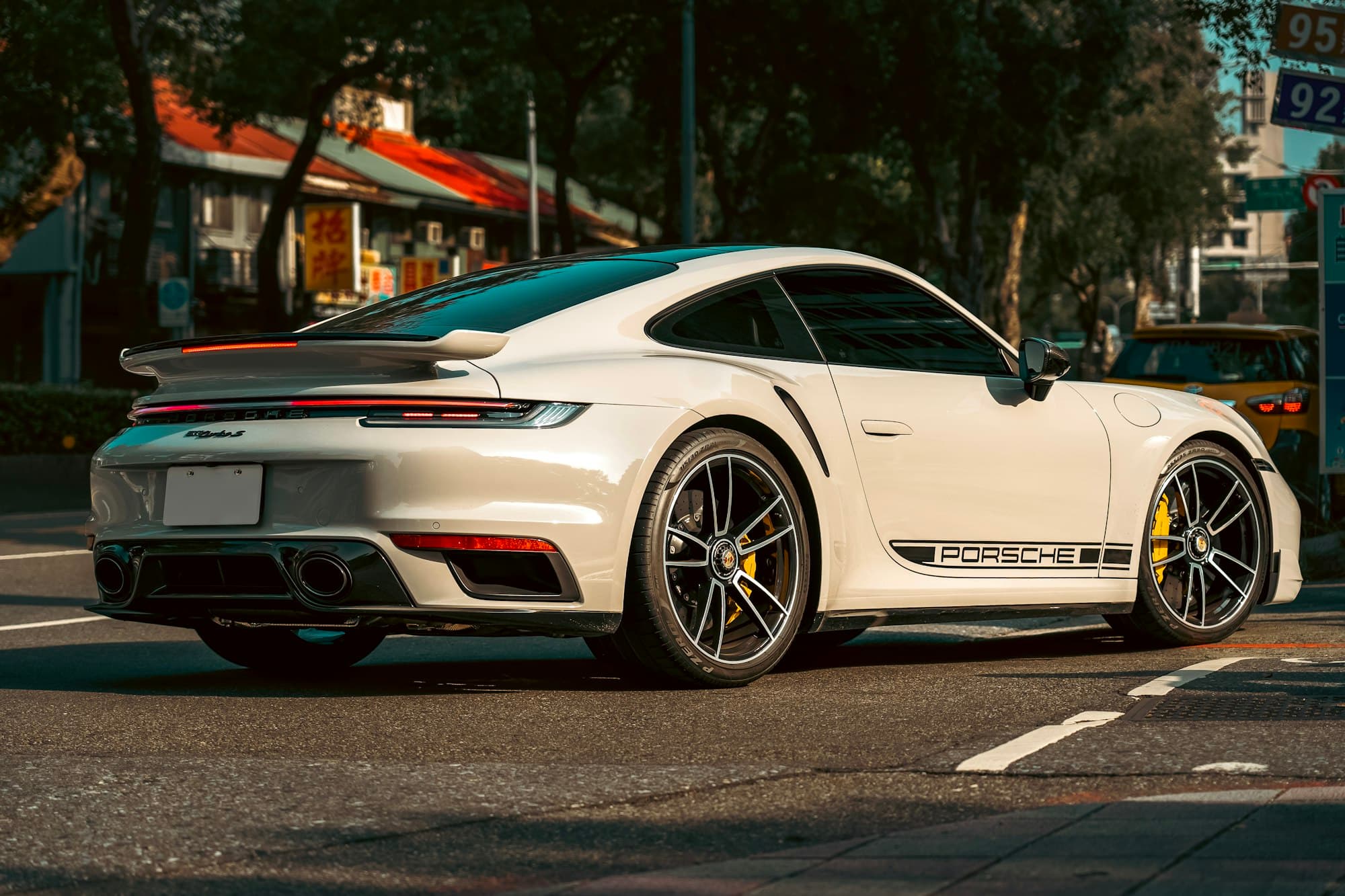
For most owners, the best paint protection for new cars is a professional ceramic coating applied after the paint has been decontaminated and polished. It gives you years of gloss, much easier washing and strong resistance to the things that slowly dull paint, like bird droppings, tree sap, road grime and UV. Paint protection film (PPF) is the better pick if stone chips are your main worry, and wax or sealant suits anyone happy to reapply it often.
The right choice depends on how you drive, where you park and how long you plan to keep the car. Below we compare all three on protection, lifespan, cost and upkeep. Preema applies Gtechniq ceramic coatings across Melbourne. We don't install PPF, so you'll get a fair picture of it rather than a sales pitch.
Why new car paint still needs protection
It's natural to assume a car fresh from the showroom has flawless paint. In reality, new cars spend weeks or months in transit, in storage yards and on dealer lots before you collect them. Along the way they pick up contamination and light marks that you often only notice in direct sun.
Modern clear coats are also thinner and softer than many people expect. They shield the colour underneath, but they mark easily and slowly oxidise under strong UV. Adding protection early means the clear coat takes far less wear over the years you own the car.
Common things we find on a car that has just been delivered:
- Iron particles from rail and brake dust embedded in the paint
- Fine swirls or marring from a rushed dealer wash
- Sticky residue left behind by transport wrap
- Water spots baked on while the car sat in a yard
Ceramic coating: long-term gloss and easier cleaning
A ceramic coating is a liquid that bonds to the clear coat and cures into a hard, thin, glass-like layer. Unlike wax, it doesn't simply sit on top and wash away. Once cured it becomes part of the surface, which is why it lasts years rather than weeks.
What a coating protects against
A quality coating resists UV fading and chemical etching from bird droppings, bug splatter, tree sap and acid rain. It's strongly water repellent, so dirt struggles to cling and the car is much quicker to wash. It also adds a depth and gloss that factory paint often lacks.
What it won't do is stop rock chips, deep scratches or car park dings. It's a thin layer, not armour. Our article on whether ceramic coating prevents scratches explains where the limits sit.
Lifespan and cost
The Gtechniq coatings we use give 5 years of protection. Our Diamond exterior package starts from $1,095 and includes Gtechniq CSL on the paint, Clear Vision Smart Glass on the windows and mirrors, and Wheel Armour on all four rims. The Signature interior and exterior package starts from $1,295. Our guide to ceramic coating prices breaks down what affects the final figure.
Maintenance
A coated car still needs washing, but a gentle hand wash with a pH-neutral shampoo lifts most grime without scrubbing. Stay away from automatic brush washes, which scratch paint and wear the coating faster. Every coating comes with free Australian-made aftercare products, so you have the right gear from day one.
Paint protection film: the physical barrier
PPF is a clear, flexible urethane film laid over the paint like a thick, invisible skin. Its real strength is impact protection. Stone chips, light scrapes and gravel rash that would mark bare paint are absorbed by the film instead, and many quality films have a self-healing top layer that lets fine scratches fade with heat.
It's a specialist product that Preema doesn't install. PPF is usually priced well above a coating, particularly if you cover the whole car rather than just high-impact areas like the bonnet, front bumper and mirrors. It makes a lot of sense for cars that do plenty of highway kilometres or have low, exposed front ends.
Film has trade-offs too. Edges and seams can collect dirt, results depend heavily on the installer, and lower-grade films can yellow with age. If you go down this path, ask which film is being used and exactly what the warranty covers.
Plenty of owners combine the two, with PPF on the front end and a ceramic coating over the rest of the car. That's a sensible setup if the budget allows.
Wax and sealant: low cost, short life
Carnauba wax gives a warm glow and decent water beading, but it's soft and breaks down quickly with heat, rain and washing. Expect it to last weeks rather than months, especially through a Melbourne summer. Synthetic sealants hold on longer, often a few months, and are easier to apply.
Both are fine if you enjoy caring for the car yourself and don't mind reapplying regularly. They offer limited resistance to etching and nothing against chips. Over a few years, the products and hours spent can add up to more than you'd guess.
How the three options compare
- Stone chips: PPF strong, ceramic minimal, wax and sealant none
- UV, bird droppings and sap: ceramic strong, PPF good, wax and sealant light
- Gloss and depth: ceramic high, PPF good depending on the film, wax warm but brief
- Ease of washing: ceramic excellent, PPF good, wax good while it lasts
- Lifespan: ceramic measured in years (5 years with our Gtechniq packages), PPF several years, wax weeks, sealant months
- Upfront cost: PPF highest, ceramic mid-range, wax and sealant lowest
- Ongoing effort: wax and sealant the most, ceramic and PPF the least
Which is the best paint protection for new cars?
For most daily drivers, a ceramic coating strikes the best balance of protection, looks and cost. It handles the everyday threats that wear paint down over time, and it makes keeping the car clean far less of a chore.
PPF from a specialist is worth a look if any of these sound like you:
- You do long freeway or country trips where stone chips are common
- You own a high-value or low-slung car with an exposed nose
- You want the strongest physical protection and cost is a secondary concern
Wax or sealant suits a short lease, someone who loves hands-on weekend detailing, or anyone after a cheap layer while they decide. If you're torn, a coating now with film added to the front later is a common and sensible path.
Why prep matters more than the product
Any protection is only as good as the surface beneath it. A coating locks in whatever is on the paint at the time, so swirls, iron fallout or wash marks left behind get sealed in for years. That's why our exterior coating packages include 1 to 3 stage paint correction, depending on whether the car is new or second-hand.
On a new car, prep usually means a thorough wash, iron decontamination, clay work to lift bonded grime, then a polish to remove dealer marring and bring out full gloss. We measure paint depth before polishing so only what's needed comes off. Our paint correction page walks through each stage.
Timing helps as well. The sooner protection goes on after delivery, the less wear the paint collects and the less correction it needs.
Protection applied at your home
Because Preema is mobile, we can coat your new car at your home or workplace from fully equipped vans, with no call-out fee. We also have a Melbourne workshop in Cheltenham, by appointment only. Tell us the make, model and how you use the car, and we'll send a free quote with a straight recommendation, including whether film from a specialist is worth adding. Request your free quote and we'll come to you.