
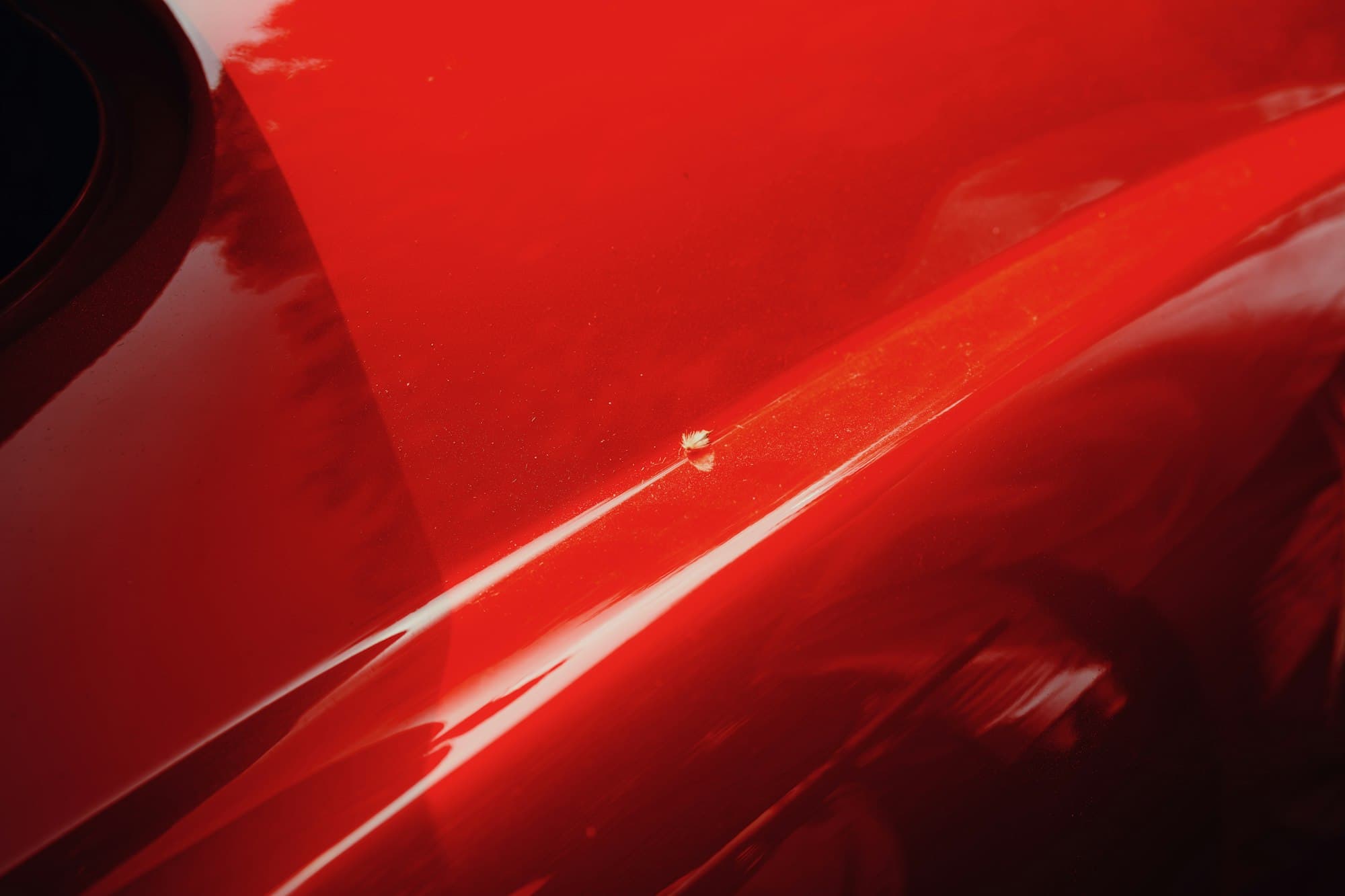
Does ceramic coating prevent scratches? Partly. A good coating helps resist the fine swirls and wash marring that come from everyday washing and drying, and it makes the car easier to clean, which means less rubbing on the paint. It will not stop stone chips, keys, deep scratches or car park scrapes.
That's the honest answer, and it's worth hearing before you pay for any kind of protection. Below we explain what a coating can and can't do, how it differs from paint protection film, and the simple habits that prevent most scratches. Our ceramic coating page has full details of what a professional coating includes.
Why coatings get described as scratch-proof
You may have seen coatings advertised with hardness ratings like 9H. That number comes from a pencil hardness test, and it describes the cured coating material, not how your car will survive a key or a rock. The coating layer is extremely thin, far thinner than your paint's clear coat.
So while the coating is hard, there isn't much of it. It can shrug off light contact, but anything with real force goes straight through to the paint.
A word on self-healing claims
Some products are marketed as self-healing. That property belongs mainly to certain paint protection films, which can soften and settle fine marks when warmed. A standard ceramic coating doesn't repair itself, so if a scratch reaches the paint, it stays there until it's polished or repaired.
What a ceramic coating does protect against
- Light marring and micro scratches from washing and drying
- Etching from bird droppings, bug splatter and tree sap, if cleaned off reasonably soon
- UV fading and oxidation
- Water spots and road film that bond to bare paint
- Brake dust baking onto coated wheels
There's also an indirect benefit. Because dirt slides off a slick coated surface more easily, you need less pressure and fewer passes to get the car clean. Less scrubbing means fewer chances to drag grit across the paint, and that's how most swirl marks happen.
What it won't stop
- Stone chips from highway driving and loose gravel
- Keying or deliberate vandalism
- Deep scratches from bushes, bike handlebars or shopping trolleys
- Door dings and car park bumps
- Swirls from automatic brush car washes over time
If any of these go through the clear coat, the coating can't fix it. Light scratches can often be polished out with paint correction, though deeper damage may need a panel shop. Our guide on removing paint scratches safely explains how to tell the difference.
How to check how deep a scratch is
Look at the mark under direct sunlight or with a phone torch held at an angle. Fine swirls that only show in harsh light usually sit in the top of the clear coat and polish out well. If you can catch a fingernail in the scratch, or see a different colour or bare metal at the bottom, it has likely gone deeper than polishing can safely fix.
Does ceramic coating prevent scratches better than wax?
Compared with a traditional wax, yes, by a clear margin. Wax is soft and sits on the surface, so it wears away fairly quickly and offers very little resistance to marring. A ceramic coating bonds to the clear coat and is far harder and more durable.
Here's a simple comparison of the main options:
- Wax: soft and short-lived, adds warmth and shine but little scratch resistance
- Spray sealant: lasts longer than wax with a slick finish, but minimal scratch resistance
- Ceramic coating: hard, thin and long-lasting, resists light wash marring and contaminants
- Paint protection film: a thick, clear film that absorbs stone chips and some scratches
How paint protection film is different
Paint protection film, often called PPF, is a thick, clear film applied over the paint like a skin. Because it has real thickness, it can absorb the impact of small stones and some scratches before they reach the paint. Many films can also recover from light marks with heat.
It's a separate product, and Preema doesn't install PPF or wraps. Film generally costs a lot more than a coating and is often applied only to high-impact areas such as the bonnet, front bumper and mirrors. If chip protection is your main worry, a specialist film installer is the right call. Our guide to paint protection for new cars compares the options in more detail.
How to avoid scratching your paint
Most scratches on a well-kept car come from washing, not driving. A few changes to your routine prevent the majority of them.
- Use two buckets, one with soapy water and one to rinse the mitt
- Pre-rinse or snow foam the car to lift grit before you touch it
- Wash from the top down, leaving the dirty lower panels until last
- Use clean microfibre mitts and drying towels, and wash them separately from other laundry
- Never dry wipe a dusty car, even with a soft cloth
- Avoid brush car washes and old sponges
- Park away from tight spots, overhanging bushes and busy car park aisles where you can
Drying is where many people undo their careful wash. Use a large, soft drying towel and pat or gently drag it across the panel rather than rubbing in circles. A blower or leaf blower on a low setting can push water out of mirrors and badges without touching the paint at all.
A coating makes all of this easier because dirt lets go sooner. Pair good technique with the free Australian-made aftercare products that come with every Preema coating, and the paint should stay swirl-free much longer. For more on keeping a coating at its best, see how long a ceramic coating lasts.
Who gets the most from a coating's scratch resistance
The resistance to light marring matters most on cars that show swirls easily and get washed often. In practice, that means:
- Black, dark grey and deep blue cars, where every fine scratch catches the light
- Daily drivers that need washing every week or two
- Cars that have just had paint correction and need that finish protected
- Family cars that get cleaned in a hurry by several different people
On a white or silver car the benefit is still there, it's just less visible, because light colours hide fine swirls well. For those owners, the easier cleaning and protection from contaminants are usually the bigger selling points.
Why paint correction comes before the coating
If your paint already has swirls and light scratches, a coating won't hide them. It will seal them in and can make them more noticeable in sunlight. That's why every Preema exterior coating includes 1 to 3 stages of paint correction, depending on whether the car is new or second-hand.
We measure paint depth first, then polish to remove as many defects as the clear coat safely allows. The coating goes on over that clean, corrected finish and protects it from there.
Our Diamond exterior package starts from $1,095. Alongside the correction, it covers the paint in Gtechniq CSL, the rims in Wheel Armour and the glass and mirrors in Clear Vision Smart Glass, with 5 year protection.
Want to know what your paint needs? We'll inspect it, tell you honestly what a coating can and can't do for your car, and give you a free quote. We travel to you anywhere across Melbourne, at home or at work. Get in touch to book a time.