
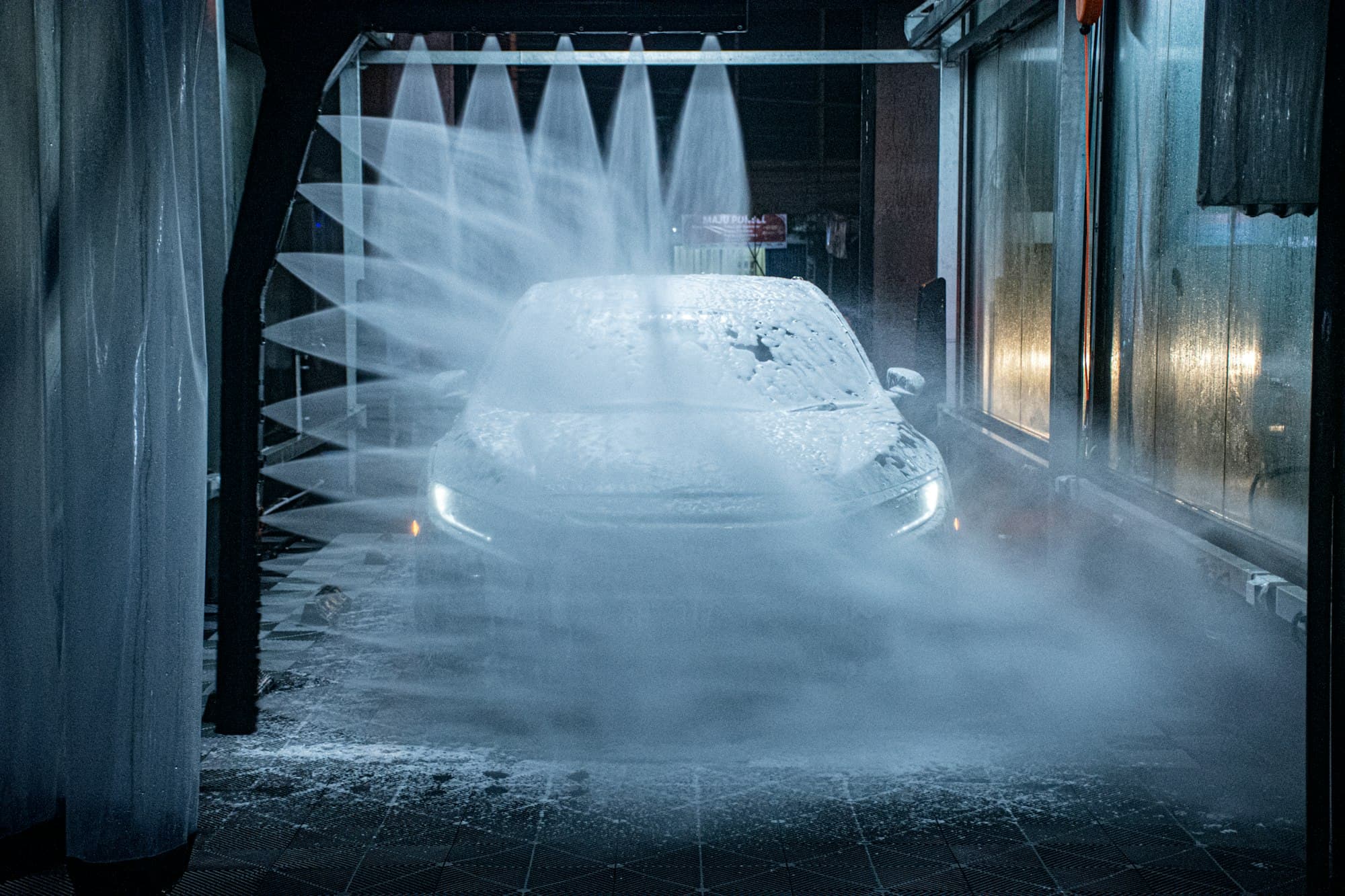
A car wash removes loose dirt from the outside of your car, usually in minutes. A detail is a far more thorough process that cleans, decontaminates and protects the paint, wheels, glass and interior, and takes hours rather than minutes. When people weigh up car detailing vs car wash options, the real question is whether the car needs a quick freshen up or proper care.
Both have a place. A careful wash is the right choice for regular upkeep, while a professional detail deals with the build-up that washing can't reach. The catch is that some types of wash can quietly damage your paint, which is worth knowing before you choose.
What a car wash actually does
Car washes come in a few forms, and they're not all equal.
Automatic brush washes
You drive in, rotating brushes or cloth strips scrub the car, and blowers dry it. It's quick and cheap. The problem is that those brushes clean hundreds of cars a day, and grit from the last muddy four-wheel drive can be dragged across your paintwork.
Touchless washes
These rely on high-pressure water and strong chemicals instead of brushes. There's less physical contact, but to compensate the soaps are often very alkaline, which can strip wax and sealants and still leave a thin film of traffic grime behind.
Hand wash bays and car wash cafes
A hand wash can be gentle or rough depending on who's doing it. When the same mitt and bucket go from car to car, or a single towel dries ten vehicles in a row, the risk of scratching goes up. Done carefully, though, a hand wash is a decent way to keep a car clean between details.
What a detail does differently
Detailing starts where a wash stops. The aim is not only to make the car look clean today but to remove what's bonded to the surfaces and leave them protected.
- A pre-wash with snow foam to soften and lift grit before anything touches the paint.
- A careful hand wash with clean mitts and fresh rinse water.
- Decontamination to dissolve iron fallout and lift bonded grime that a sponge can't move.
- Wheels, tyres, arches and door jambs cleaned properly, not just rinsed.
- Protection applied to paint and trims so dirt sticks less and water runs off.
- Inside the car, vacuuming, steam cleaning, stain treatment and leather care.
If you'd like the complete picture, our explainer on what car detailing actually involves breaks the process into stages.
Car detailing vs car wash at a glance
Here's a side-by-side summary of the two.
- Time: a wash takes 5 to 20 minutes. A detail takes roughly 1 to 6 hours depending on the package.
- Interior: most washes leave it untouched or give it a quick vacuum. A detail cleans every surface, including seats, carpets, vents and leather.
- Contamination: a wash removes loose dirt. A detail also removes bonded iron, tar and road film.
- Protection: a wash may spray on a temporary wax. A detail leaves a proper layer of protection.
- Risk to paint: automatic and rushed washes can cause swirls. A careful detail is designed to avoid them.
- Cost: a wash is cheaper per visit. A detail costs more but lasts longer and protects the car's condition.
Why automatic washes leave swirl marks
Swirl marks are fine circular scratches in the clear coat. You see them most on dark cars in direct sun or under service station lights, where they look like a spider web around each reflection.
They're caused by grit being rubbed across the surface. Brushes that aren't cleaned between cars, recycled wash water and dirty drying cloths are the usual culprits. One trip won't ruin your paint, but regular automatic washing builds up the damage over months and years.
Once swirls are there, no amount of washing removes them. They have to be polished out through paint correction, where the clear coat is carefully levelled with a machine polisher. Our guide to removing paint scratches safely explains what's involved.
When a wash is enough, and when you need a detail
A wash will do when
A wash is the right call when the car is already in good shape and just needs its weekly or fortnightly clean.
- The car was detailed recently and has light dust or rain spots.
- It has a ceramic coating and only needs a gentle maintenance wash.
- The interior is tidy and you just want the outside fresh for the weekend.
In these cases, a careful hand wash at home using two buckets, a pH-neutral shampoo and clean microfibre towels is the safest option.
Book a detail when
A wash won't solve problems that have been building for months. Look out for any of the following.
- Paint feels rough or gritty even straight after washing.
- Wheels stay stained with brake dust that won't shift.
- The interior smells stale, or seats and carpets are marked.
- Water has stopped beading on the paint.
- You're about to sell the car, or you've just bought a second-hand one.
- You're planning a ceramic coating, which needs a fully decontaminated surface.
If you're not sure how often your car should be getting this level of care, our guide on detailing frequency sets out a schedule by how you drive.
Is washing at home a safe middle ground?
It can be the safest option of all, as long as the technique is right. The aim is to touch the paint as little as possible and never with anything dirty.
Rinse the car first to knock off loose grit. Use one bucket for soapy water and a second for rinsing the mitt, so the dirt you remove doesn't go straight back on. Work from the roof down and leave the lower panels and wheels until last, since that's where the heaviest grime sits. Dry with a soft, clean microfibre towel, patting or gliding rather than scrubbing.
What home washing can't do is the deeper work. Decontamination, stain removal, steam cleaning and fresh protection still need a proper detail every few months.
Which suits a new car?
New paint is at its best on delivery day, and it's also when it's easiest to protect. Taking a brand new car through a brush wash in its first weeks is one of the quickest ways to add swirls that will later need correcting.
A better plan is a professional detail soon after you pick the car up, often paired with a ceramic coating, followed by gentle hand washes from then on. That way the finish stays close to how it left the showroom.
Cost and time compared
A wash is cheaper each time, but the sums look different over a year. A Preema exterior detail starts from $145 for a Mini Detail, while full interior and exterior packages start from $245 and go up to $495 for Signature. Because a detail leaves protection behind, the car stays cleaner for longer and later washes are quicker.
Time matters too. Driving to a wash, queueing and drying the car yourself eats into a Saturday. With mobile detailing, the work happens at your home or workplace while you get on with your day. Our post on mobile car detailing in Melbourne explains how that works.
Ready to give your car more than a rinse? Ask Preema for a free quote. We come to you anywhere across Melbourne in fully equipped vans, with no call-out fees. Request your quote.