
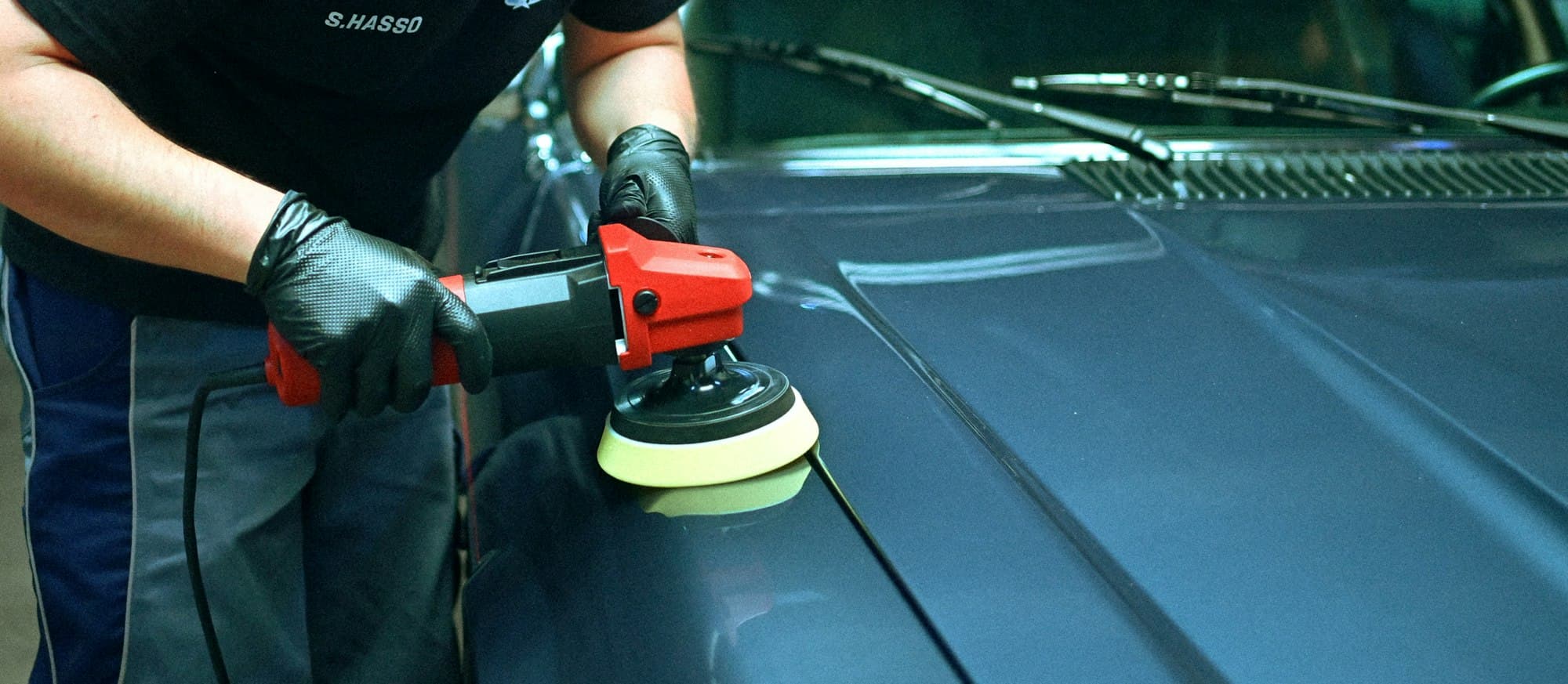
Working out how to remove car paint scratches starts with one question: how deep do they go? Most light scratches and swirls sit only in the clear coat and can be polished out, either gently by hand or by a professional with a machine polisher. Scratches that have cut through to primer or bare metal can't be polished away and need touch-up paint or a panel shop.
The bigger risk is often the fix rather than the scratch. Heavy-handed DIY polishing can turn a minor mark into a respray. This guide covers how to judge depth, what's safe to try at home, how professional paint correction works and when it's time for a panel repairer.
The layers in your car's paint
Car paint is built up in layers, and knowing them makes every other step easier to understand. From the outside in, a typical modern finish looks like this:
- Clear coat: the transparent, glossy top layer that takes most everyday wear
- Base coat: the colour layer, with little gloss of its own
- Primer: a grey or white layer that helps paint stick to the panel
- The panel itself: steel, aluminium or plastic
The whole system is only a fraction of a millimetre thick. Every polish removes a tiny amount of clear coat, and once it's gone it can't be put back without repainting the panel.
How to check scratch depth
The fingernail test
Wash and dry the area first so you're not grinding dirt into it. Then run a fingernail lightly across the scratch, not along it. If your nail glides over without catching, the mark is most likely confined to the clear coat. If it catches, it's deeper and may reach the colour or beyond.
The water test
Splash a little water over the mark. If it almost disappears while wet, it's a shallow clear coat scratch that should respond well to polishing. If it stays clearly visible, expect a deeper defect.
Read the colour
- A white or pale line on darker paint: usually a clear coat scratch
- The car's colour showing but flat and dull: through the clear and into the base coat
- Grey or white showing beneath the colour: down to primer
- Silver metal, or black and grey on a bumper: through to the panel
Swirls are scratches too
Swirl marks are the fine circular scratches you notice in sunlight or under service station lights. They come mostly from washing and drying technique, and because they live in the clear coat, they're one of the most fixable kinds of damage.
How to remove car paint scratches safely at home
For very light marks, a cautious approach by hand is reasonable. The goal is to improve the scratch with as little abrasion as possible.
- Wash and dry the panel properly with clean microfibre before you start
- Use a fine finishing polish or a light scratch remover on a soft foam applicator
- Press lightly and work a small area at a time
- Wipe off the residue and inspect in good light before going again
- Stop if a couple of gentle passes haven't improved it
- Protect the area afterwards with a sealant or wax
For stone chips and small deep marks, factory colour-coded touch-up paint is the practical fix. Build it up in thin layers with a fine brush and let each one dry. It won't look perfect up close, but it seals exposed metal against rust.
Skip the shortcuts. Toothpaste, melamine sponges, kitchen scourers and heavy cutting compounds can all leave the panel worse. Filler pens and glazes may hide a mark for a few washes, but nothing has actually been removed.
If you're tempted to buy a machine polisher, a dual action machine is far more forgiving than a rotary because the pad oscillates rather than spinning in one fixed path. Even so, practise on a test panel or an old bonnet first, and start with the softest pad and finest polish you have.
Why aggressive DIY polishing goes wrong
Trouble usually begins when a hand polish doesn't do enough and the next step is a coarser compound, a cheap rotary machine or more pressure. Without a paint depth gauge, there's no way to know how much clear coat you have left to work with.
- Strike-through on edges and body lines, where paint is thinnest
- Holograms and buffer trails left by rotary polishers
- Hazy, dull patches where a cutting compound wasn't refined afterwards
- Uneven gloss between the polished patch and the rest of the panel
- Heat damage to plastic bumpers and trim
Strike-through is the costly one. Once the clear coat is cut through, the only real repair is respraying the panel, which costs far more than the scratch ever would have.
How professional paint correction works
Paint correction levels the clear coat around scratches by removing a very small, controlled amount until the defect is gone or greatly reduced. Before any polishing, we measure paint depth so we know exactly how much material there is. The car is then washed, iron decontaminated and clayed, so no grit gets dragged under the pad.
Single-stage enhancement
Best for light swirls and wash marring. One polishing stage lifts gloss and clarity and removes the haze that makes paint look tired.
Two-stage correction
For moderate swirls and scratches. A cutting stage removes the defects, then a refining polish clears any haze the cut leaves behind and restores full gloss.
Three-stage correction
For heavily marked paint. Two cutting stages work through deeper damage before a final refining polish.
Not every scratch should be chased all the way out. If a defect sits deeper than the clear coat can safely give, a careful detailer will reduce it rather than leave the paint dangerously thin. Correction is priced by quote, because paint condition and car size vary so much.
Between stages, each panel is wiped down to remove polishing oils and checked under strong lighting. Oils can temporarily fill fine scratches and make the paint look better than it is, so this check shows what has really been removed and what still needs work.
When you need touch-up paint or a panel shop
Polishing has limits, and some damage is better handed to a panel repairer. Signs you've reached that point include:
- Your fingernail catches firmly and you can see primer or metal
- A long key scratch running across one or more panels
- Dents, cracked paint or peeling clear coat
- Rust starting to form around a chip
- Any damage from a collision
Often the best outcome combines both. A panel shop repairs the deep damage, then correction brings the rest of the car's paint up to the same standard.
Keeping new scratches away
Most swirls and light scratches come from washing and drying. Use two buckets with grit guards, a clean wash mitt and plush microfibre towels, and never wipe dusty paint dry. Our comparison of professional detailing and a car wash explains why brush washes cause so much of this damage.
Once the paint is corrected, a ceramic coating helps keep it looking that way by making dirt easier to rinse off, so you scrub less. It won't stop a key or a shopping trolley, as our post on what ceramic coating can and can't prevent explains, but it reduces the wash marring that brings swirls back.
Not sure how deep your scratches go? Preema comes to your home or workplace across Melbourne with no call-out fee, checks the paint in person and tells you what can realistically be fixed. Ask for a free quote to get started.