
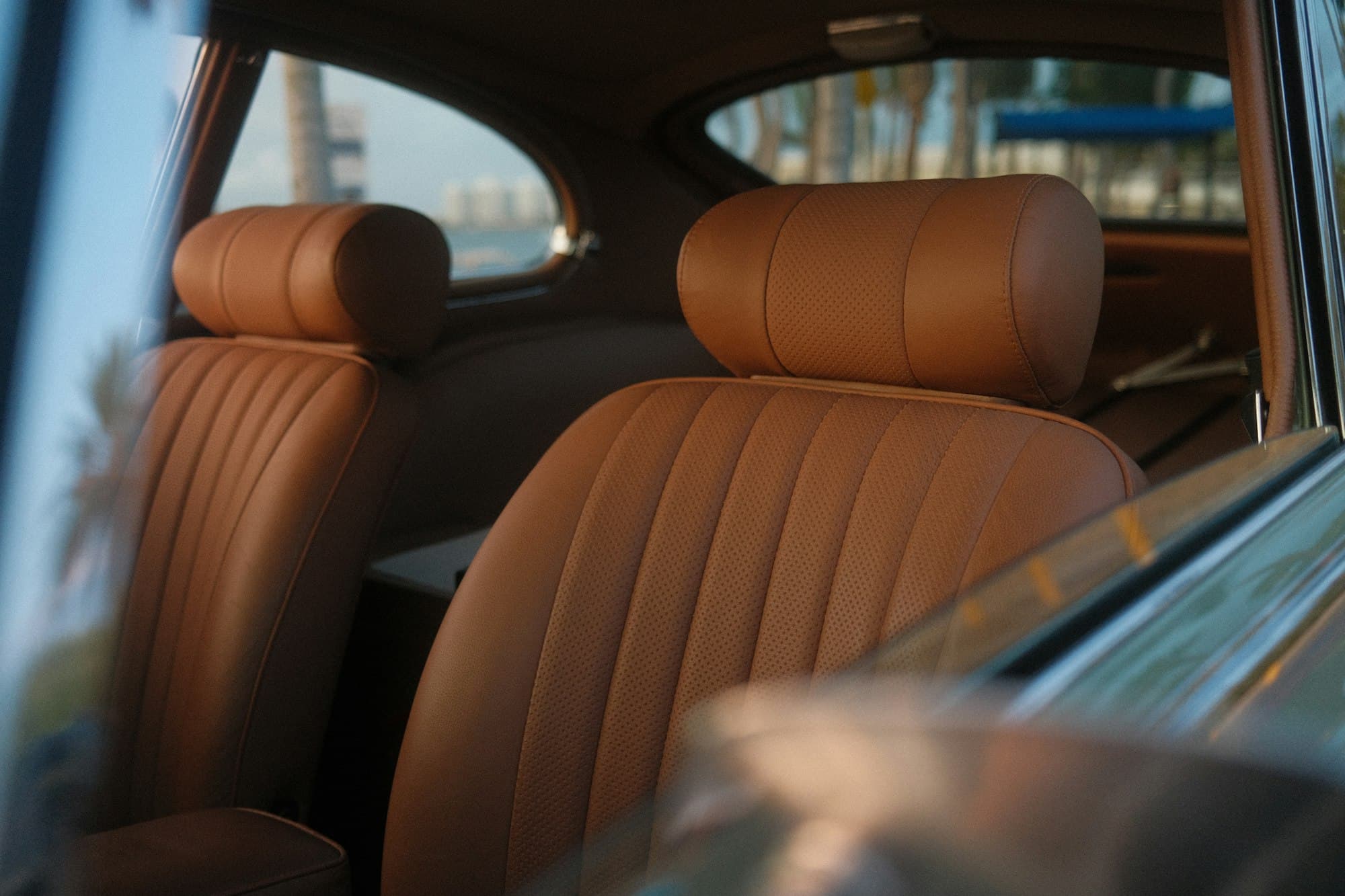
An interior ceramic coating is a protective layer applied to the surfaces inside your car, including leather, vinyl, plastics and fabric. It helps spills bead up instead of soaking in, makes stains easier to remove and reduces wear and fading on the surfaces you touch every day.
It's especially useful if you have kids, pets or light coloured upholstery. At Preema, our interior-only coating starts from $495 using Gtechniq products, and it's also part of our Signature interior and exterior ceramic coating package. Here's what it covers, what it doesn't, and how to look after it.
How an interior coating works
Interior coatings are formulated differently from paint coatings. They form a thin, flexible barrier on the surface that is designed to leave leather and fabric feeling much as they did before, without stiffness or a shiny film.
Once applied, the surface becomes more resistant to liquids and grime, so a spilt drink has time to be wiped up before it sinks in. Dirt that would normally grind into leather creases sits on top instead, where it can be lifted off.
What surfaces it protects
Leather
Leather seats pick up dye transfer from denim, body oils and grime that darken and dry out the surface over time. A coating helps keep that grime on top where it wipes off, and reduces rubbing wear on bolsters and armrests.
Vinyl and plastics
Dashboards, door cards and centre consoles take a lot of sun through the windscreen and side windows. A coating helps protect against UV fading and makes fingerprints and dust easier to clean off.
Fabric and carpet
Cloth seats and carpets are where spills do the most damage, because liquid soaks straight in. Coated fabric repels liquid long enough for you to blot it up, which is often the difference between a quick clean and a permanent stain.
Steering wheel and touch points
The steering wheel, gear selector, door pulls and switches take constant contact from hands, sunscreen and hand cream. Over time this leaves a shiny, worn look. A coating on these areas makes them easier to wipe clean and slows that build-up.
Who benefits most from an interior ceramic coating
- Families with young children, snacks and juice boxes in the back seat
- Dog owners dealing with muddy paws, drool and fur
- Anyone with cream, white or light grey upholstery
- Work vehicles and cars that carry a lot of passengers
- New car owners hoping to keep the cabin like the day they picked it up
- Owners planning to sell later, since a clean, unstained interior helps a car present well
Melbourne summers matter here too. Sun pouring through the windows heats and dries the dash and seats, and a coating gives those surfaces some extra protection against fading.
Light upholstery is the clearest case. Cream and white leather look beautiful, but they show every mark from jeans and dirty hands. A coating won't make them stain-proof, but it buys you time and makes cleaning far easier.
What an interior coating won't do
It's worth being clear about the limits so your expectations match the result.
- It won't repair existing stains, tears, cracks or worn patches
- It won't make surfaces fully stain-proof if spills are left for hours or days
- It won't stop scratches from pet claws or sharp objects
- It won't remove odours on its own
- It still needs regular, gentle cleaning to keep working
Existing marks need to be cleaned before coating, which is why we deep clean the cabin first. If your interior needs serious attention, our interior detailing service covers vacuuming, steam cleaning, leather care and stain treatment.
How the coating is applied
Good results come from the clean, not just the coating. A typical interior coating job follows these steps:
- A full vacuum of seats, carpets, mats and crevices
- Steam cleaning and stain treatment on fabric and carpet
- A gentle clean of leather to lift oils and dye transfer
- Wiping down vinyl and plastics to remove old dressings and grime
- Allowing surfaces to dry before the coating goes on
- Applying Gtechniq protection to each surface and letting it set
Because we're mobile, all of this happens at your home or workplace. Our vans carry everything needed, including the steam equipment.
What's included in Preema's interior package
Our interior-only coating starts from $495. The final price depends on your vehicle's size and condition, and we confirm it before we start.
The cabin is thoroughly cleaned first so the coating bonds to fresh surfaces. Gtechniq protection is then applied to leather, vinyl, plastics and fabric. You'll also receive free Australian-made aftercare products to keep the interior clean without wearing down the coating.
If you'd like the outside protected too, the Signature package from $1,295 combines the interior coating with our full exterior coating, which adds paint correction plus Gtechniq protection for the paintwork, wheels and glass. Our guide to coating prices breaks down each option.
Coating a new car's interior
The best time to coat an interior is before it has been lived in. A new cabin needs only a light clean before the coating goes on, and every surface starts protected from the first coffee, the first muddy football boots and the first trip to the beach.
It's also worth thinking about if the car is leased or likely to be sold in a few years. Seats, carpets and trim that have been protected from the start are much easier to bring back to a clean, presentable state when it's time to hand the car over or list it for sale.
Caring for a coated interior
A coated interior is easier to look after, but it still needs a little attention. The aim is to clean gently and often, rather than scrubbing hard every few months.
- Wipe up spills quickly with a clean, damp microfibre cloth
- Vacuum seats and carpets regularly so grit doesn't wear into fabric and leather
- Use a pH-neutral interior cleaner, like the aftercare products we provide
- Avoid harsh all-purpose cleaners, degreasers and solvent-based products
- Skip greasy leather dressings unless they're labelled safe for coated surfaces
- Use a seat cover or old blanket for dogs on long or muddy trips
High-touch areas like the driver's seat see the most wear, so keeping those clean helps the coating last. A professional interior detail now and then keeps everything fresh, and our article on interior car detailing in Melbourne explains what's involved.
Interior coating versus fabric protector sprays
Retail fabric protector sprays can help for a while, but they're generally meant for fabric only and need frequent reapplying. The bigger difference is preparation.
- Retail spray: low cost, fabric only, wears quickly, usually applied over whatever dirt is already there
- Professional interior coating: covers leather, vinyl, plastics and fabric, applied after a deep clean, designed for long-term protection
The deep clean beforehand matters as much as the product. Sealing in grime defeats the purpose. If you're still deciding whether coating suits your car, our honest look at whether ceramic coating is worth it may help.
Want to protect your car's interior before the next spill? We'll come to you at home or at work anywhere in Melbourne, and there's no call-out fee. Request a free quote and we'll let you know what your interior needs.