
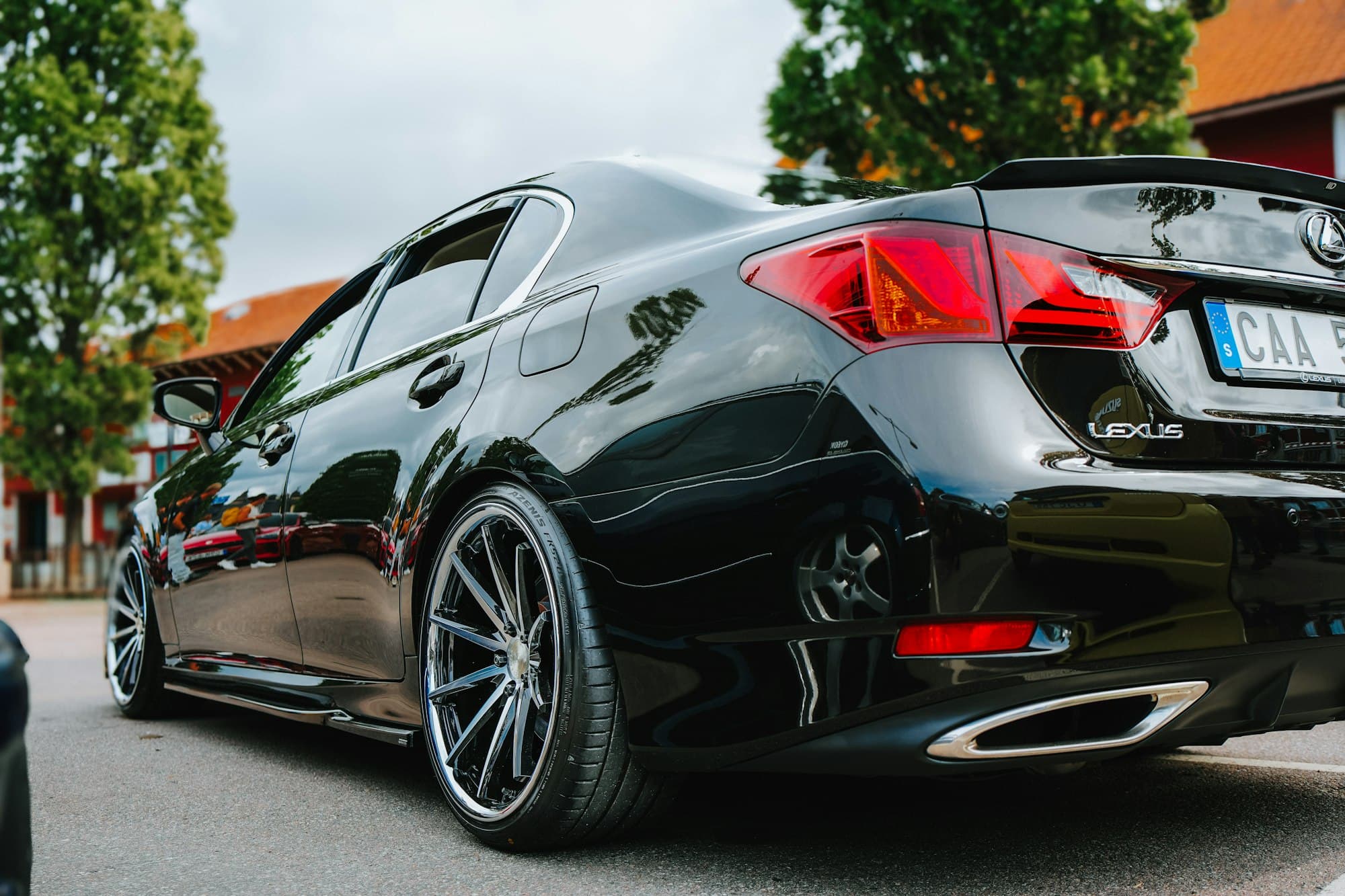
Exterior car detailing protects your vehicle by removing the contaminants that slowly eat into paint, then sealing the clean surface so new grime has less to hold on to. In Melbourne that means dealing with strong summer UV, bird droppings, tree sap, brake dust and road film, all of which cause more damage the longer they sit.
A regular wash removes loose dirt. A detail goes further, lifting bonded contamination, treating wheels and glass and adding a protective layer suited to how you drive and park. You can see our packages and starting prices on the exterior detailing page, or read on to understand what each stage does for your paint.
What Melbourne conditions do to your paint
Modern car paint has a clear coat on top that protects the colour underneath. Most paint damage starts with that clear coat being etched, stained or worn thin. These are the main threats around Melbourne.
UV and heat
Long summer days and high UV slowly break down unprotected clear coat, which leads to dullness and, eventually, oxidation and fading. Black plastic trim and rubber seals suffer too. Heat makes every other contaminant worse, because a hot panel speeds up the chemical reaction.
Bird droppings and insects
Bird droppings are acidic and can etch into clear coat within a short time on a hot day, leaving a dull mark even after the dropping is wiped off. Insect splatter on the front bumper and mirrors does similar harm. Both should be removed gently and as soon as you can.
Tree sap and pollen
Park under gums or street trees and you will know the sticky spots sap leaves behind. Once it hardens it bonds to the paint and becomes hard to remove without the right product. Rubbing at it dry is a common way to put scratches into the surrounding paint.
Road grime and brake dust
Road film, tar spots and fine metal particles from brake pads collect on lower panels and wheels. Brake dust is especially stubborn, because hot particles can embed in paint and wheel finishes and slowly cause small rust-coloured specks.
Why exterior car detailing starts with a safe wash
Most swirl marks are caused by washing, not by driving. Dragging grit across paint with a dirty sponge or brush leaves thousands of fine scratches that show up as a spider web in direct sun. A detailer's wash is designed to avoid that.
The products matter as much as the method. A pH-neutral shampoo cleans without stripping existing protection, while harsh household detergents remove wax and sealant and can dry out rubber seals. Professional-grade, environmentally friendly products, like the ones Preema uses, are made to be tough on dirt and gentle on everything else.
It begins with a snow foam pre-wash, which clings to the panels and loosens dirt so much of it rinses off before anything touches the car. The contact wash follows, with clean mitts, a gentle shampoo and a method that keeps grit away from the paint. Drying is done with soft, clean towels or air, never a rough chamois that has been used on the wheels.
Decontamination: removing what washing leaves behind
Even after a careful wash, run your fingertips over the paint inside a thin plastic bag and it may feel rough. That texture is bonded contamination that shampoo cannot shift. Decontamination removes it in stages:
- Iron remover reacts with embedded metal particles and dissolves them, often turning purple as it works
- Tar and adhesive remover softens road tar and sticky residue so it wipes away
- A clay bar or clay mitt glides over lubricated paint and picks up whatever remains
Decontaminated paint feels glass smooth, looks clearer and gives any protection product a clean surface to bond to. At Preema, iron decontamination is part of our higher exterior tiers. Exterior Emerald starts from $245 and Exterior Diamond from $345, while the Mini Detail from $145 is a good regular maintenance wash.
Choosing protection: wax, sealant or ceramic
Once the paint is clean, a protective layer gives contaminants something to sit on other than your clear coat. It also makes the car easier to wash, because dirt releases more readily. Here is how the main options compare:
- Wax: a warm, deep gloss and easy to apply, but it wears off fairly quickly and needs frequent reapplication
- Synthetic sealant: lasts longer than wax and handles heat well, a sensible middle ground for regular detailing
- Ceramic coating: a hard, chemically bonded layer that resists UV, etching and chemicals for years, with strong water beading
- Paint protection film: a clear physical film that absorbs stone chips, a separate product that Preema does not install
Our ceramic coatings use Gtechniq, with five years of protection. Exterior coatings include Gtechniq CSL on the paint, Clear Vision Smart Glass on windows and mirrors, and Wheel Armour on all four rims. For more help choosing, read our guide to the best paint protection for new cars or our post on whether ceramic coating prevents scratches.
Wheels, tyres and glass
Wheels take the worst of the brake dust and road grime, so they get their own brushes, mitts and cleaners. A detailer cleans the faces, the spokes and the inner barrels, then the tyre walls, and finishes with a dressing that leaves rubber looking neat rather than greasy. Clean wheels also make it easier to spot kerb damage or wear early.
Tyres benefit from more than a shine. Cleaning off old dressing and road grime lets you see the tread and sidewalls clearly, and a quality water-based dressing helps the rubber look even without slinging greasy spots down the side of the car when you drive away.
Glass is just as important for safety as for looks. Road film and traffic grime cause smearing when the wipers run, and glare at night. Cleaning the outside of every window and mirror properly, and adding a glass coating if you choose a ceramic package, helps rain bead and clear far more easily.
When paint needs more than a detail
Detailing removes contamination and protects what is there, but it cannot remove scratches that are already in the clear coat. If your paint looks hazy or covered in swirl marks under strong light, it may need paint correction. We measure paint depth first, then choose single, two or three stage correction depending on how marked the paint is.
Correction and protection work best together. Polishing removes the defects, and a coating or sealant applied straight afterwards helps keep the refined finish looking that way. That is why our exterior ceramic packages include one to three stages of correction, depending on whether the car is new or second-hand.
Deeper scratches that have reached the colour coat need paint repair rather than polishing. Our article on removing paint scratches safely explains how to tell the difference.
Looking after your paint between details
Protection lasts longer and works better with a little help from you. A few simple habits go a long way:
- Wash every couple of weeks with a pH-neutral shampoo and clean mitts
- Remove bird droppings and sap promptly with a soft cloth and a quick detailer spray
- Avoid automatic car washes with brushes, which are hard on paint and coatings
- Park in shade or under cover where you can, especially in summer
- Dry the car with a soft towel rather than letting water spots form in the sun
If your car is due for some care, ask for a free quote. We bring everything to your home or workplace across Melbourne, with no call-out fee.